
- Home
- Products
- Fixed prostheses
- E.max and Porcelain
Pressed e.max ceramics and porcelain-fused-to-metal
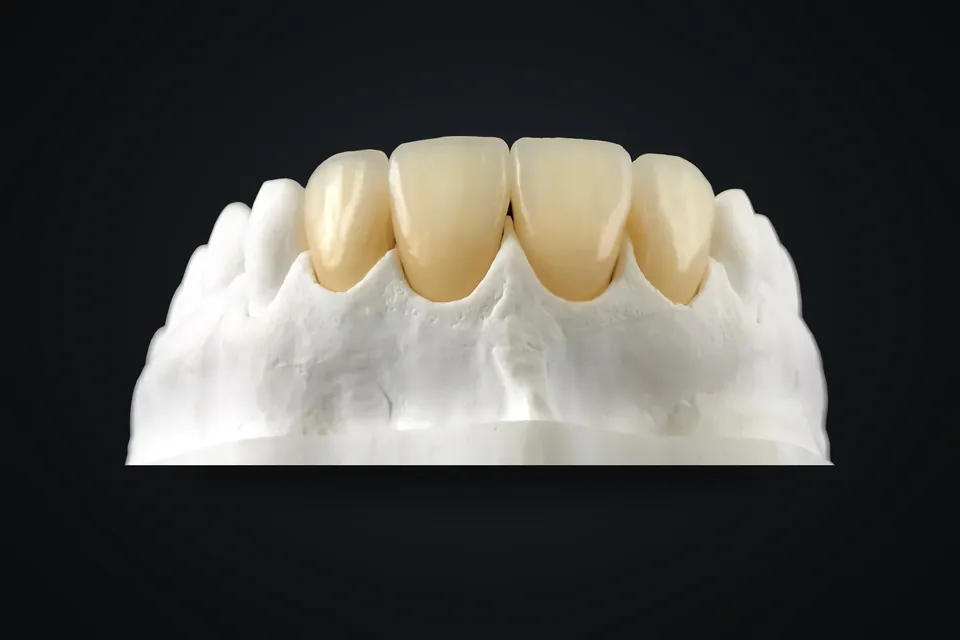
For metal-free restorations we use Ivoclar IPS e.max pressed lithium disilicate; for metal-supported work, Noritake porcelain on Wiron 99, Magnum, Shera or precious metal frameworks. We choose between the two systems with you based on abutment shade, bridge length and cementation conditions.
Indications
When to choose it
- Anterior and posterior single crowns (e.max)
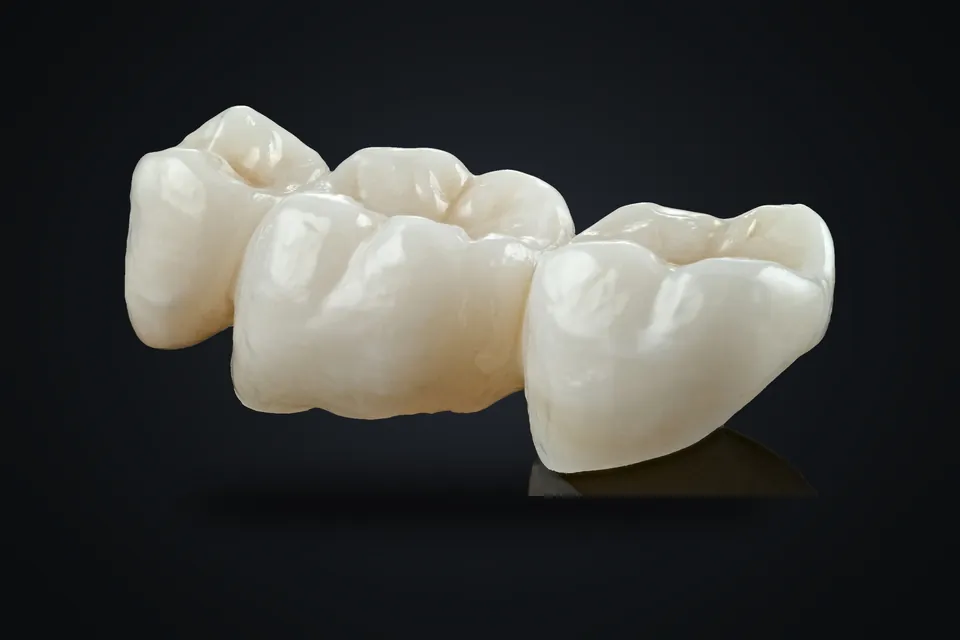
- Three-unit bridges in the anterior and premolar region (e.max, within the manufacturer's indications)
- Long-span bridges (porcelain-fused-to-metal)
- Crown on a cast post and core
- Single anterior restorations where shade matching is difficult
Points to discuss with the laboratory
- An e.max bridge including the molar region is outside the manufacturer's indications; zirconia or porcelain-fused-to-metal is recommended for these cases.
- E.max on a dark abutment or metal post needs an ingot of suitable opacity; always report the abutment shade.
- For a patient with a known nickel sensitivity, an alloy other than Wiron 99 (Ni-Cr) should be chosen.
For the dentist
Thickness defined by the wax-up
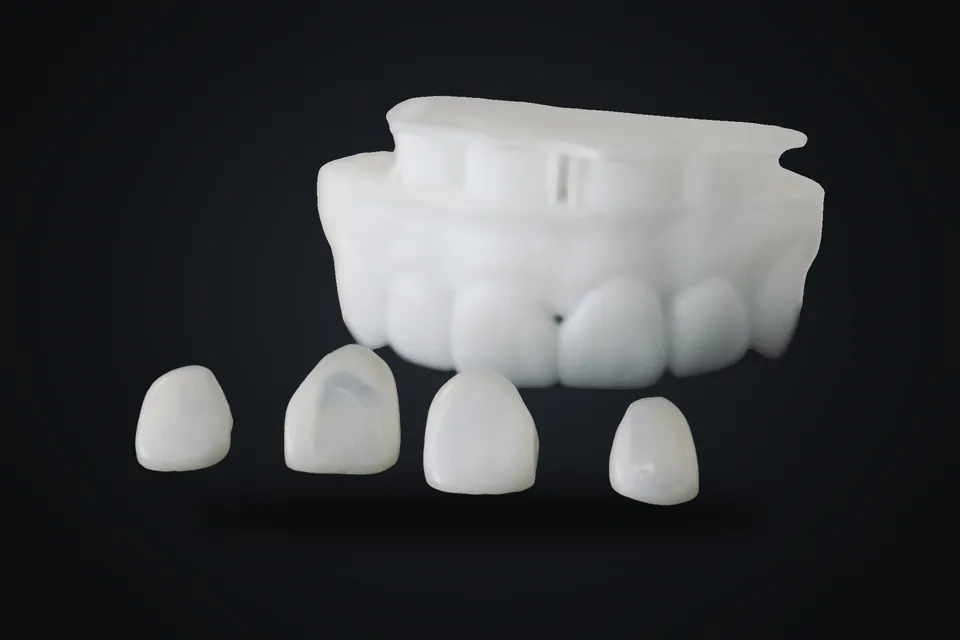
E.max crowns are pressed from a wax-up; section thickness is checked at the wax-up stage. In the anterior region, incisal layering can be added with a cut-back.
Metal framework for a long bridge
For long spans, a metal framework gives the bridge the strength it needs while keeping connector cross-sections small.
Ingot chosen to the abutment shade
When the abutment shade and post material are reported, the ingot opacity is chosen accordingly.
Materials
| Material | Brand | Note |
|---|---|---|
| IPS e.max Press | Ivoclar | Pressed lithium disilicate ceramic |
| Noritake porcelain | Noritake | Porcelain-fused-to-metal veneering |
| Wiron 99 | BEGO | Ni-Cr crown and bridge alloy |
| Magnum | MESA | Crown and bridge alloy |
| Shera crown and bridge alloy | Shera | Crown and bridge alloy |
| Precious metal alloy | Ivoclar | According to the dentist's preference |
| Vitapan 3D-Master | VITA | Shade matching |
Manufacturer and CE details of materials are on the Quality page.
What we need when you send a case
- Impression or intraoral scan, opposing arch and bite registration
- Shade with the VITA guide; abutment shade for e.max
- Photograph taken with the shade guide in the mouth
- Planned cementation method (adhesive or conventional)
- Alloy preference for metal-supported work and any nickel sensitivity
- Root canal impression for post and core work
Production process
- System selectionDepending on bridge span, abutment shade and occlusion, the choice between e.max and porcelain-fused-to-metal is made.
- Wax-up or frameworkFor e.max, a full-contour or cut-back wax-up is made; for porcelain, a metal framework is prepared.
- Pressing or metal productionThe e.max ingot is pressed; the metal framework is cast or produced by laser sintering.
- Framework try-inFor metal-supported bridges, a framework try-in is carried out before porcelain.
- Layering and glazePorcelain is layered to the target shade; surface character is given with staining and glaze.
Photographs
Frequently asked questions
Is adhesive cementation mandatory for an e.max crown?
For lithium disilicate crowns with adequate retention, the manufacturer also permits self-adhesive or conventional cementation. For thin-section restorations with poor retention, adhesive cementation after hydrofluoric acid and silane is preferred.
Which alloy should I choose for porcelain-fused-to-metal?
We work with Wiron 99, Magnum and Shera crown and bridge alloys and Ivoclar precious metal alloys. For a patient with nickel sensitivity, a Ni-Cr-free alloy should be chosen. Simply write your preference on the Rx form.
Can e.max be used on a dark abutment?
It can be used with a more opaque ingot and a thickness plan based on the abutment shade. Reporting the abutment shade with a shade guide directly affects the result. For very dark or metal abutments, zirconia or porcelain-fused-to-metal may be more predictable.
Frequently requested with this case
Zirconia Crowns and Bridges
Monolithic or layered zirconia crowns and bridges; CAD/CAM milling, sintering and shading.
Laminate Veneers
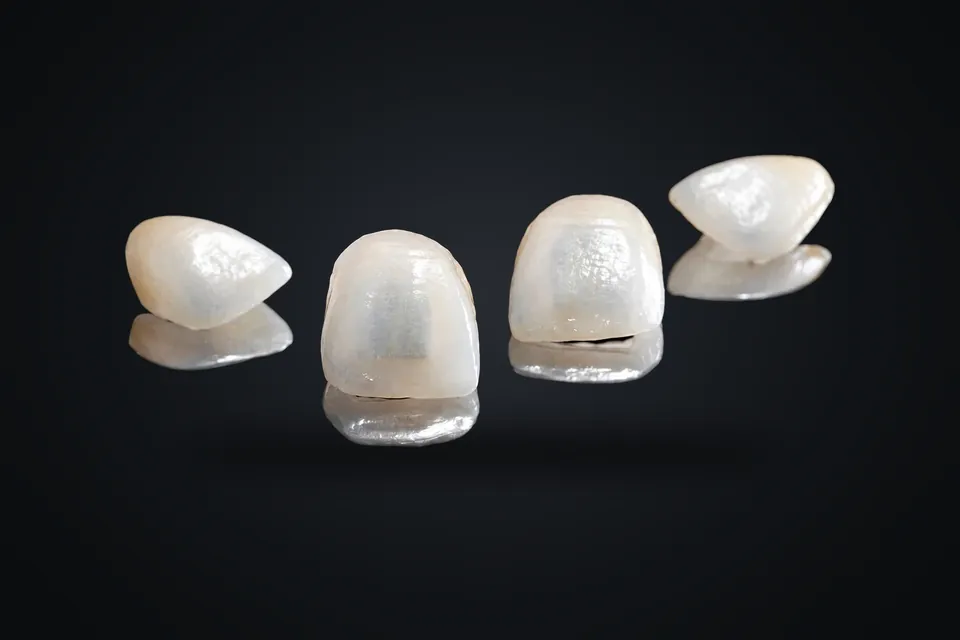
IPS e.max laminate veneers; form, shade and length are planned in advance with a wax-up and mock-up.
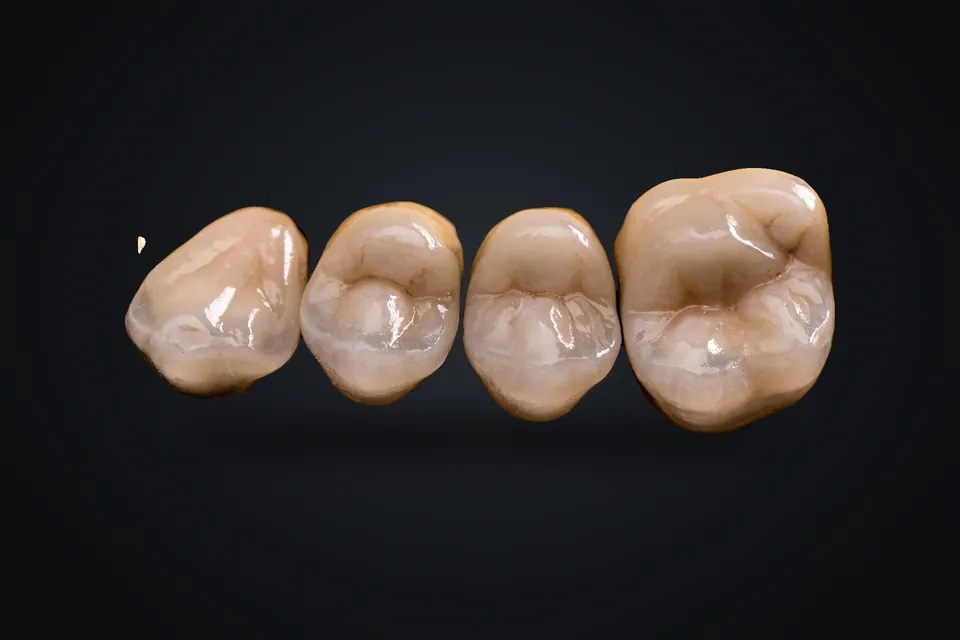
Crowns and Bridges
Single crowns, multi-unit bridges and posts and cores, in zirconia, e.max or porcelain-fused-to-metal.
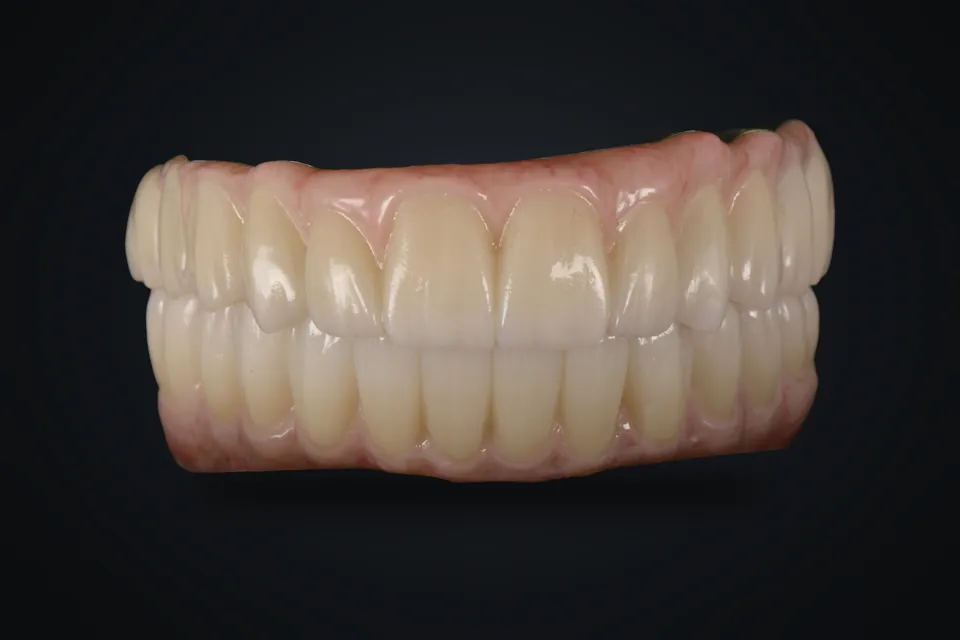
Send your e.max and porcelain case.
Fill in the form or call us. Your case manager responds within 24 hours.