
- Home
- Products
- Fixed prostheses
- Zirconia
Zirconia Crowns and Bridges
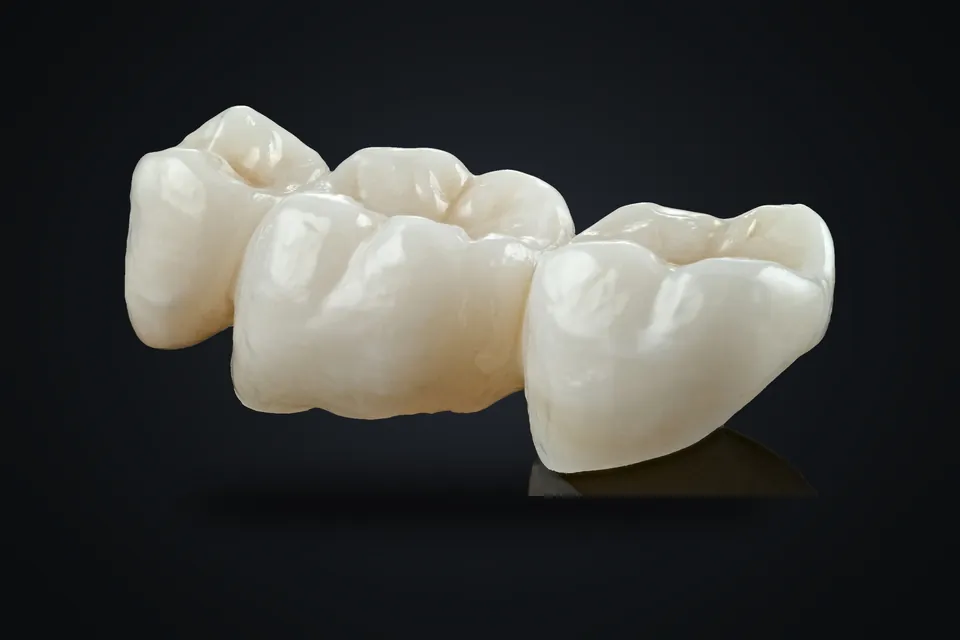
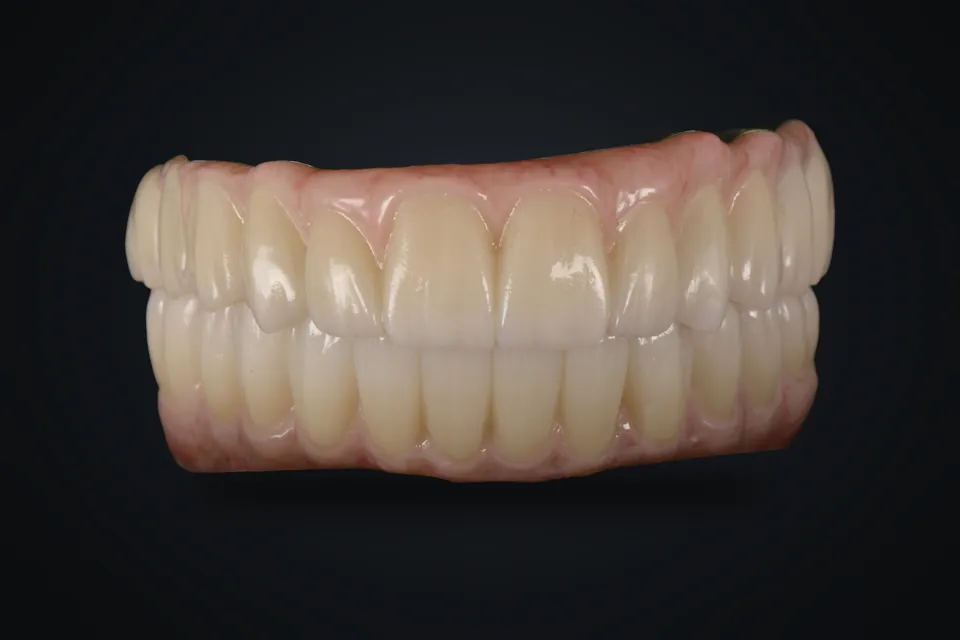
Zirconia restorations are monolithic or porcelain-veneered crowns and bridges, milled by CAD/CAM from scan or impression data and sintered. We decide the zirconia type and veneering with you, based on the case's shade target, preparation and occlusion.
Indications
When to choose it
- Single crowns and bridges in the posterior region
- Monolithic crowns where high chewing forces are expected
- Layered (veneered) aesthetic crowns in the anterior region
- Cases on a discoloured abutment or metal post that need masking
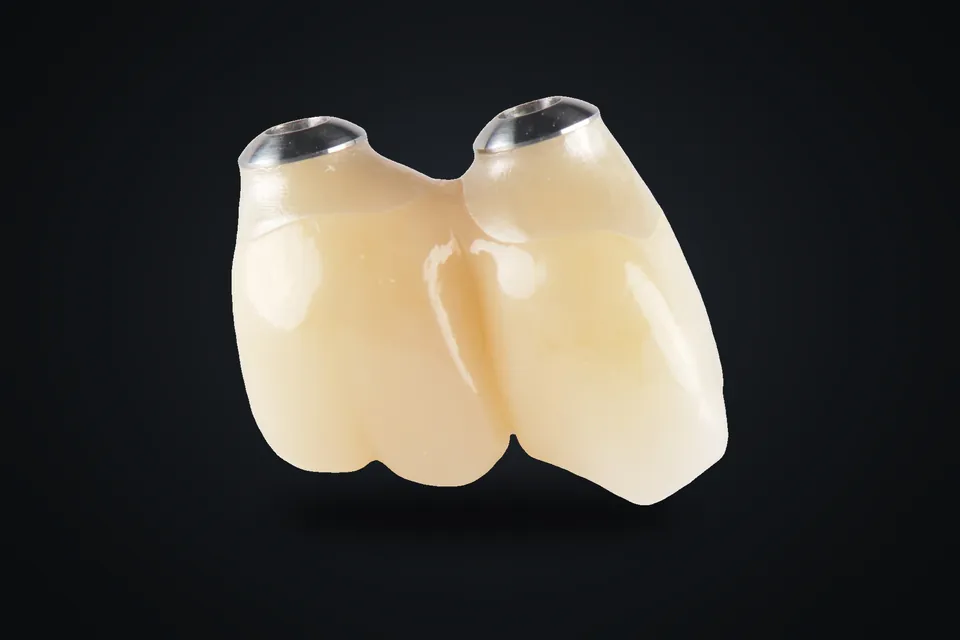
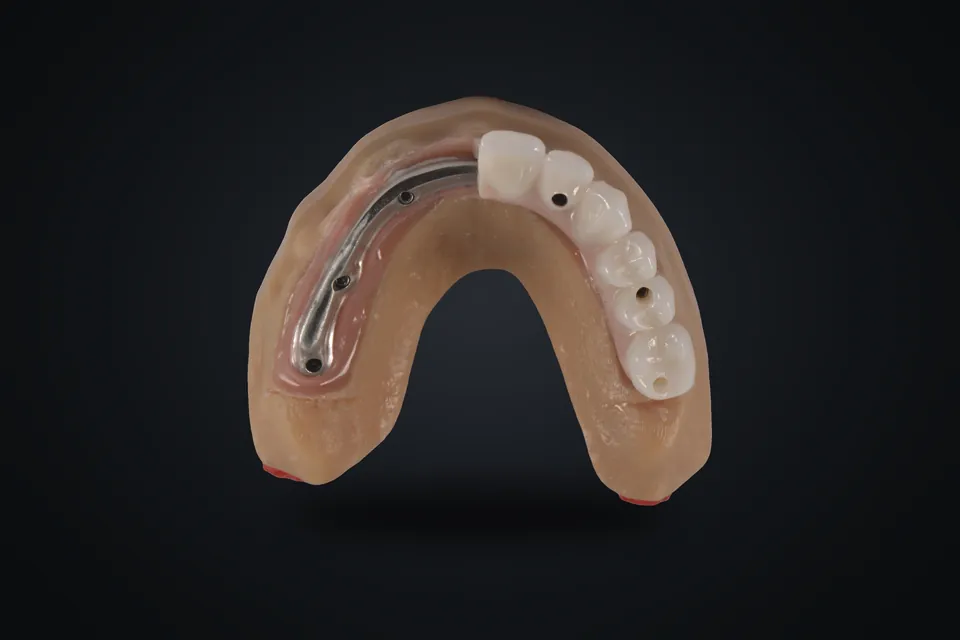
- Screw- or cement-retained implant superstructures
- Multi-unit bridges (depending on connector space and the dentist's plan)
Points to discuss with the laboratory
- If there is insufficient interocclusal and gingival space for the connector height, the bridge plan should be reassessed.
- Layered zirconia carries a risk of porcelain chipping; a monolithic option should be discussed for patients with parafunction.
- For minimal preparations, the minimum thickness requirement of the chosen zirconia type should be checked before production.
For the dentist
Monolithic or layered
A full-contour monolithic structure can be chosen for posterior teeth, and a layered structure with porcelain-veneered labial surfaces for anterior teeth. The decision depends on the shade target and occlusion.
Margin check before milling
The margin is marked on the scan data in the design software. If a margin cannot be read, we contact you before production.
Fit check after sintering
The sintered restoration is checked on the model for seating, contacts and occlusion. Corrections are made before shading and glazing.
Materials
| Material | Brand | Note |
|---|---|---|
| Zirconia disc | Zirkonzahn | Monolithic restorations and veneering frameworks |
| Noritake CZR | Noritake | Veneering porcelain on a zirconia framework |
| Vitapan 3D-Master | VITA | Shade matching |
Manufacturer and CE details of materials are on the Quality page.
What we need when you send a case
- Intraoral scan (STL) or precision silicone impression; margins must be clearly readable
- Opposing arch scan or impression
- Bite registration (in-scan bite or silicone record)
- Shade: VITA classical or 3D-Master guide and abutment shade
- For anterior work, a photograph taken with the shade guide in the mouth
- Monolithic or layered preference, bruxism note
Production process
- Data and margin checkMargins, path of insertion and interocclusal space are checked on the scan or model.
- CAD designAnatomical form, contacts and, for bridges, connector cross-sections are designed.
- MillingThe design is milled from a pre-sintered zirconia disc, allowing for sintering shrinkage.
- SinteringThe milled structure is sintered in the furnace to reach its final density and strength.
- Shading and veneeringMonolithic work is stained and glazed; layered work is veneered with porcelain.
- Final checkMarginal fit, contacts and occlusion are checked on the model a final time.
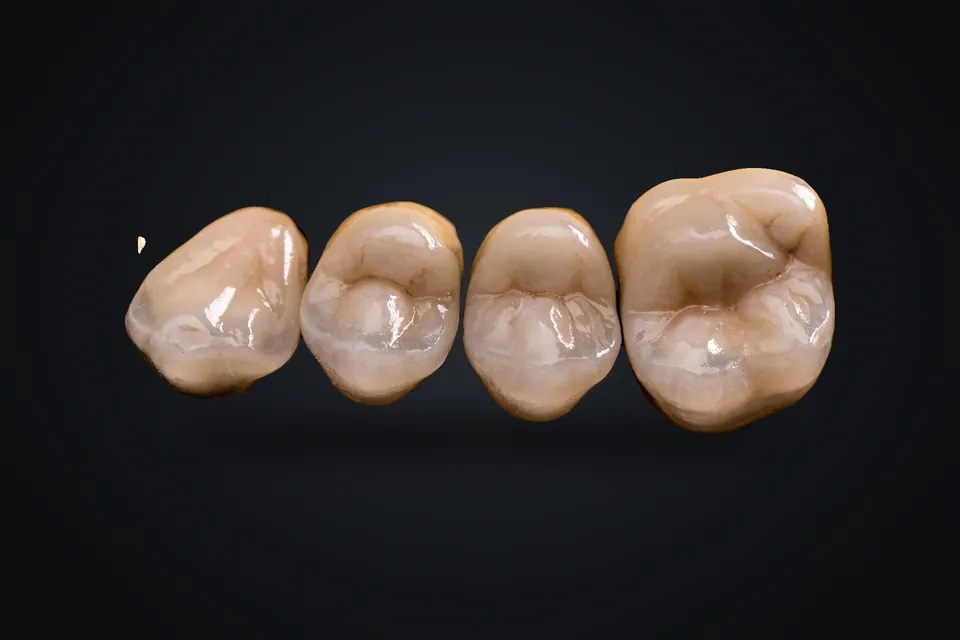
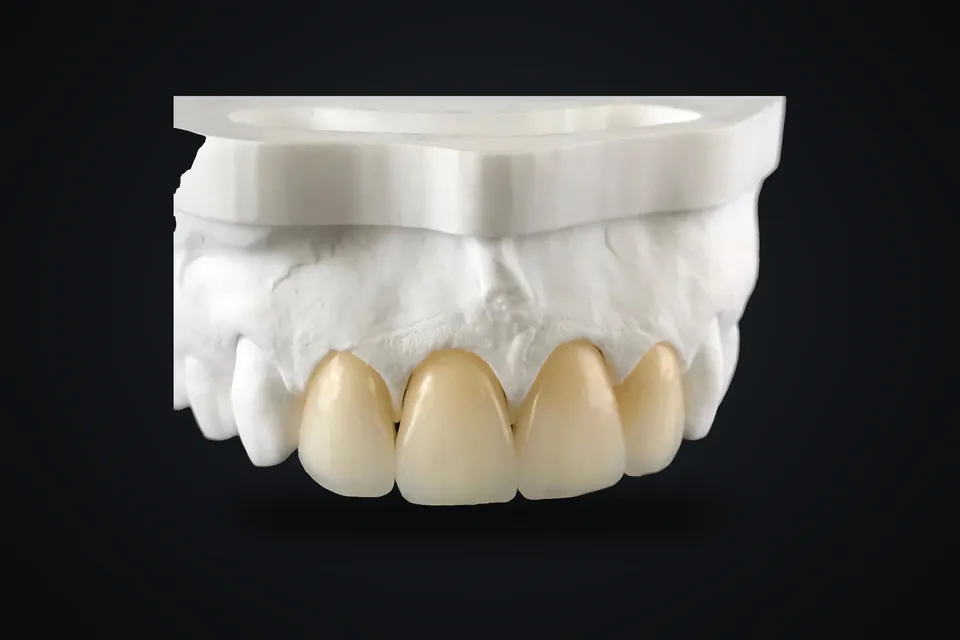
Photographs
Frequently asked questions
Which cement should I use for a zirconia crown?
Conventional or resin-modified glass ionomer cements can be used for preparations with adequate retention. If retention is poor, adhesive cementation with a zirconia-compatible primer is preferred. Follow the cement manufacturer's instructions.
Should I request monolithic or layered?
In the posterior region and where parafunction is suspected, monolithic zirconia reduces the risk of fracture and chipping. Where anterior aesthetic expectations are high, a layered structure or labial cut-back can be considered. If you are unsure about a case, you can consult us with photographs.
Which margin type is suitable for zirconia?
A chamfer or rounded internal-angle shoulder margin gives the clearest result for design and milling. Irregular, sharp margins can reduce edge quality in milling. If the margin cannot be read, we contact you before starting production.
What should be done with zirconia adjusted in the mouth?
A monolithic zirconia surface adjusted in the mouth must be polished or re-glazed. A rough surface can increase wear on the opposing tooth. If needed, you can send the restoration back to the laboratory for re-glazing.
Frequently requested with this case
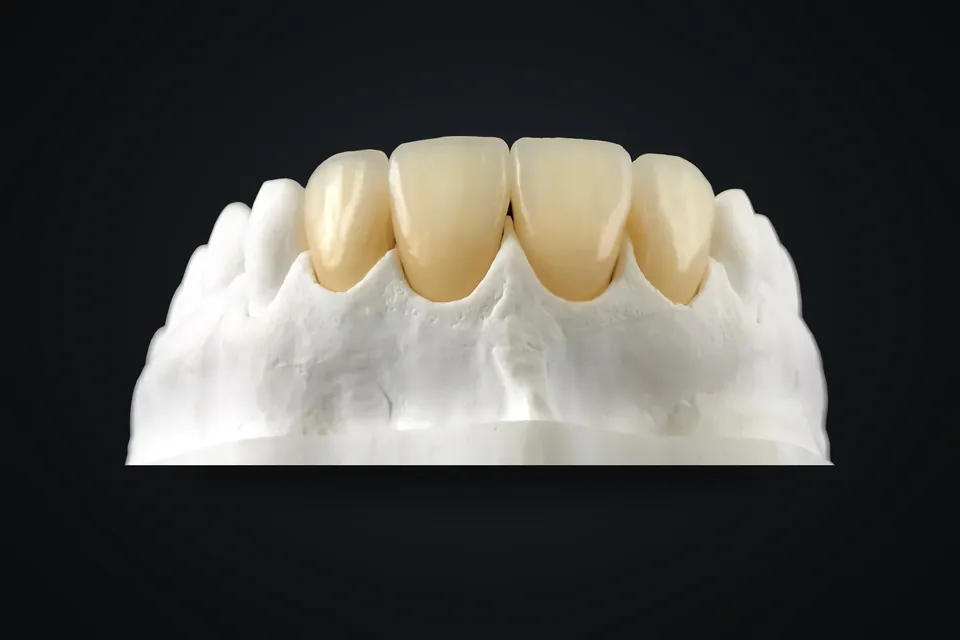
Pressed e.max ceramics and porcelain-fused-to-metal
Pressed IPS e.max ceramics and Noritake porcelain-fused-to-metal, for anterior aesthetics and long bridges.
Implant Crowns and Bridges
Screw- or cement-retained implant crowns and bridges, with Ti-base and custom abutment options.
CAD/CAM Milling
CAD/CAM milling from zirconia, PMMA and wax discs; production directly from your scan file.
Send your zirconia case.
Fill in the form or call us. Your case manager responds within 24 hours.