
- Home
- Products
- Implant restorations
- All‑on‑4 / 6 Hybrid
All‑on‑4 / All‑on‑6 Hybrid Prosthesis
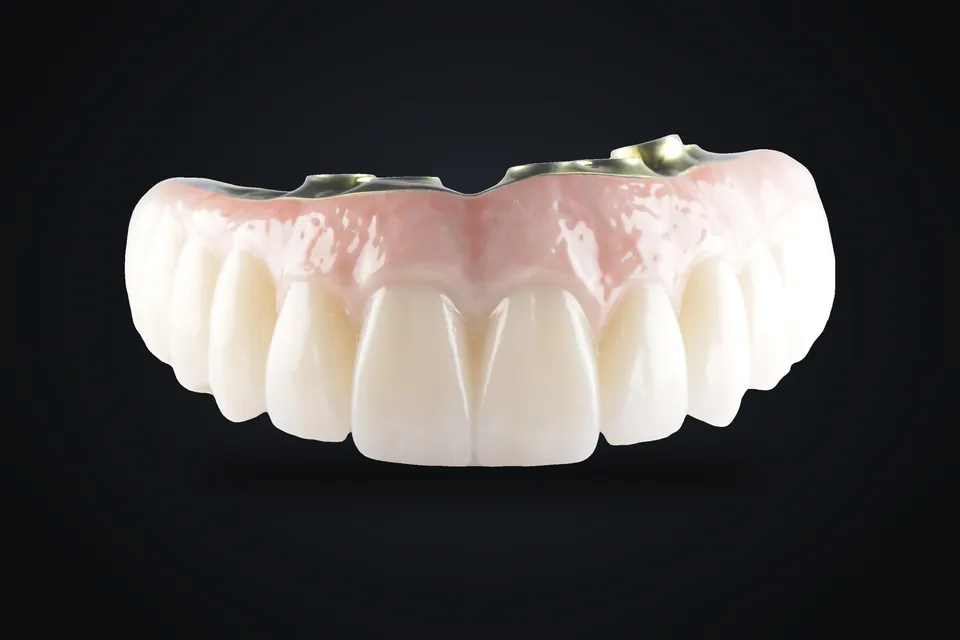
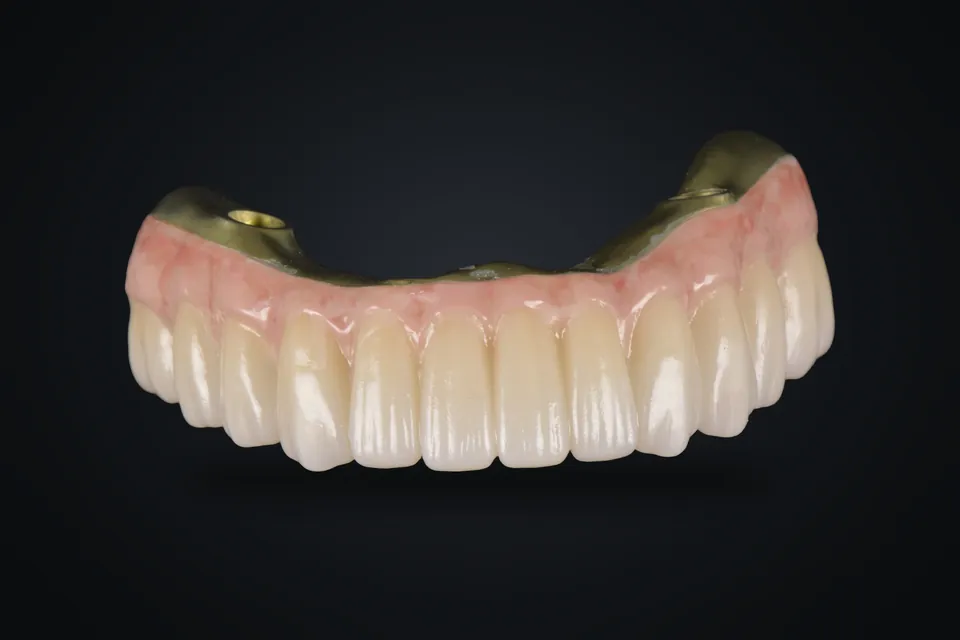
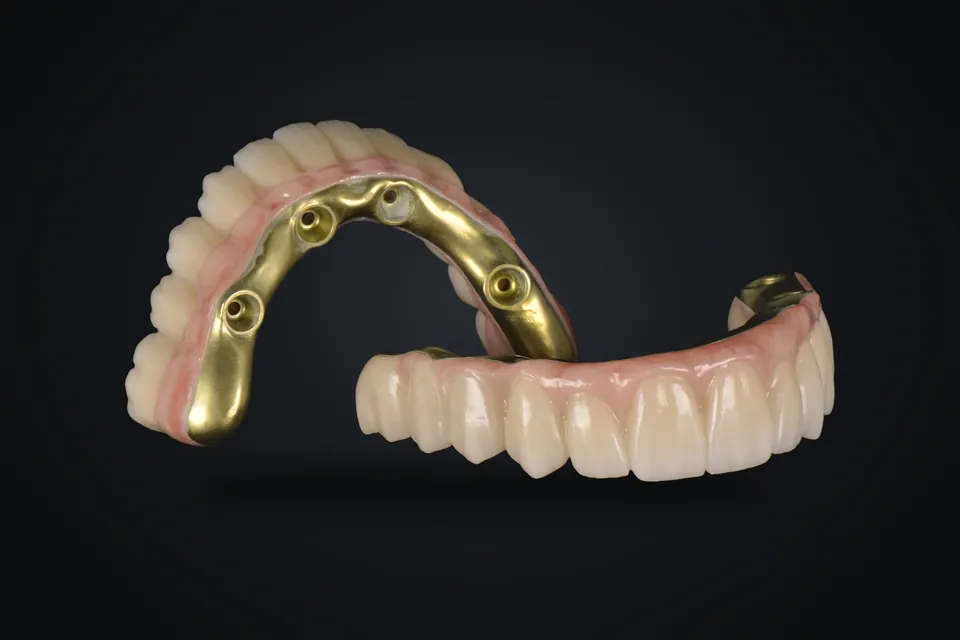
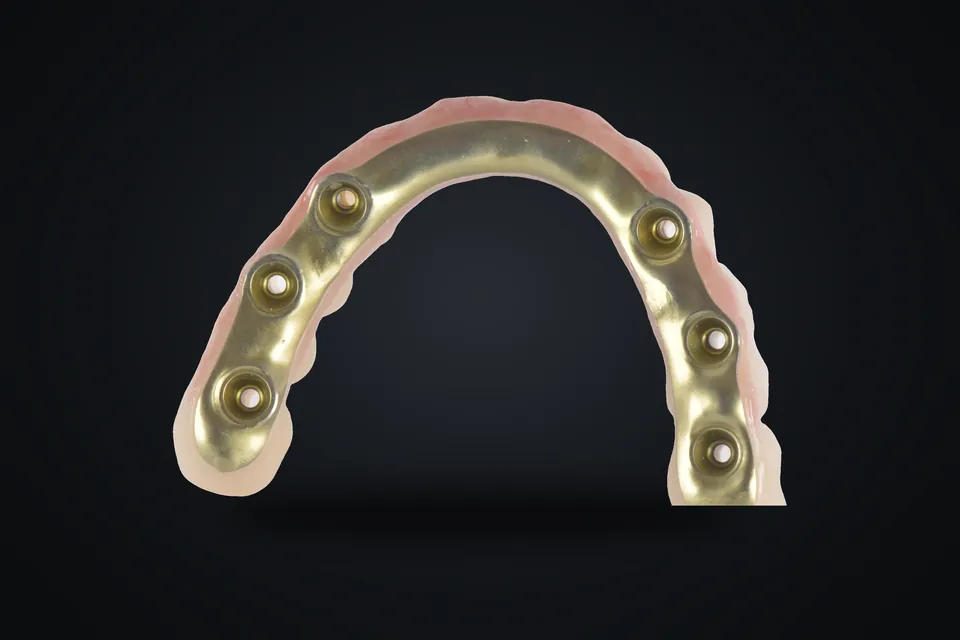
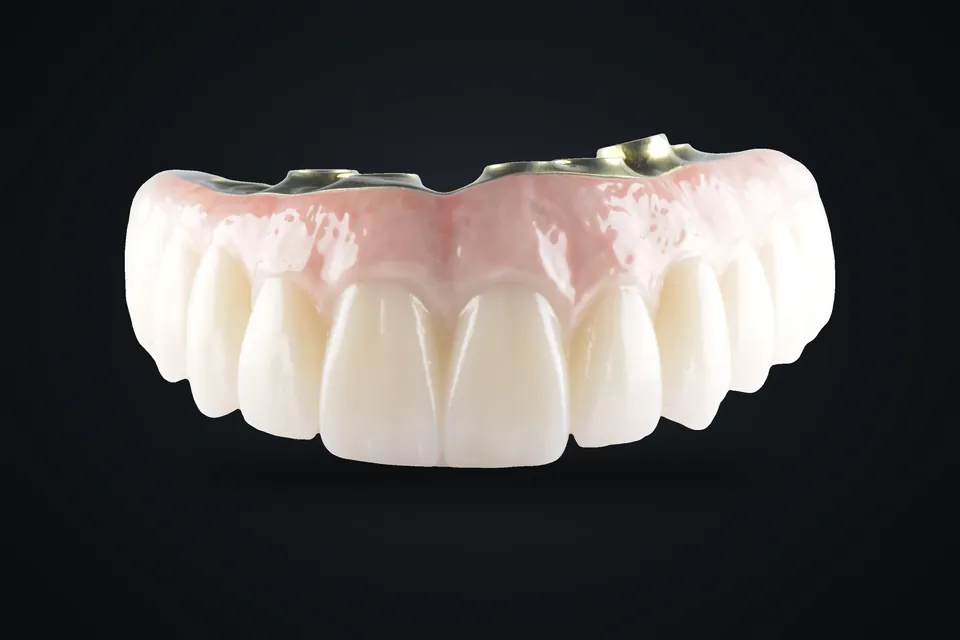
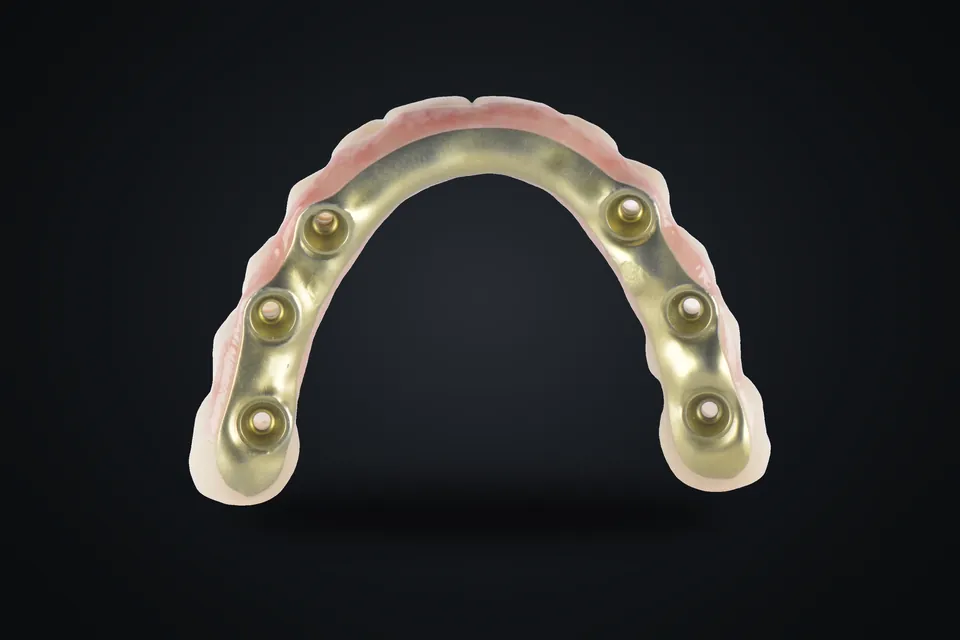
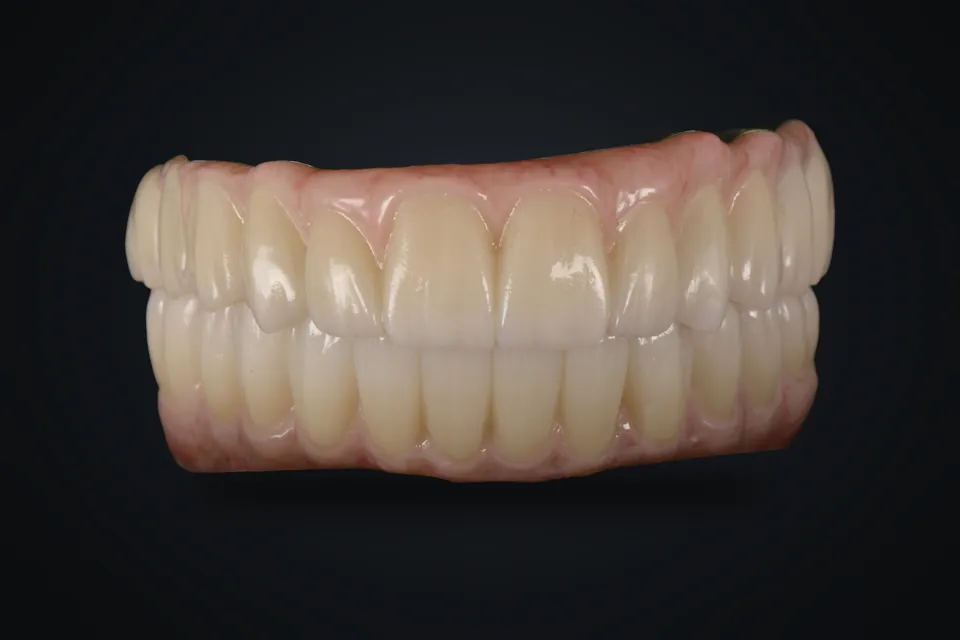
We produce screw-retained full-arch prostheses on four to six implants, either with acrylic or composite teeth on a metal bar framework or as a zirconia superstructure. Passive fit, vertical dimension and aesthetics are checked step by step through verification and tooth set-up try-ins.
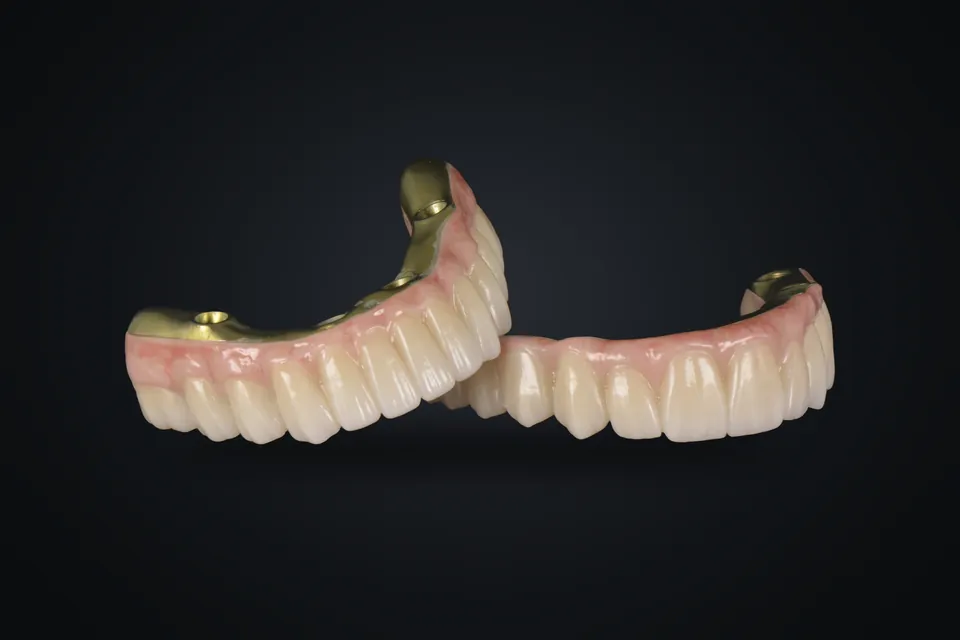
Indications
When to choose it
- Fixed full-arch on 4–6 implants in a fully edentulous jaw
- Cases in which gingival and lip support must be provided by the prosthesis because of bone loss
- Angled implants placed with the Nobel All‑on‑4 protocol
- Transition to definitive after a PMMA temporary full-arch
- Replacement of an existing hybrid prosthesis
Points to discuss with the laboratory
- If vertical restorative space is insufficient, there is no room for the bar and teeth; space should be measured before planning the prosthesis.
- If the junction between prosthesis and gingiva is visible in the smile line, the aesthetic result is limited; this must be planned before surgery.
- With a monolithic zirconia full-arch, intraoral repair options are more limited than with an acrylic hybrid.
For the dentist
Verification jig
Implant positions in the impression or scan are checked in the mouth with a verification key. The bar is produced on the verified model.
Set-up first, then bar
The teeth are set in wax before the bar is produced; aesthetics and vertical dimension are approved. The bar is designed to stay within the approved set-up.
Cleansable tissue surface
The tissue surface of the prosthesis is finished convex and polished so that interdental brushes and a water flosser can be used.
Digital bar production
The bar framework is produced in one piece from a digital design by laser sintering or CAD/CAM.
Materials
| Material | Brand | Note |
|---|---|---|
| Metal bar framework | – | Produced by laser sintering or CAD/CAM |
| Denture teeth (Vivodent, Yamachi, Ortalux) | Ivoclar, Yamachi, Union Dental | Tooth set-up for an acrylic hybrid |
| Solidex | Shofu | Composite teeth and gingival veneering |
| Acrylic (Vertex, Biodent Plus) | Dentimex, Dentsply | Gingival department |
| Zirconia disc | Zirkonzahn | Monolithic full-arch superstructure option |
| PMMA | – | Temporary full-arch and prototype |
Manufacturer and CE details of materials are on the Quality page.
What we need when you send a case
- Implant system, multi-unit abutment type and implant positions
- Open-tray impression with splinted transfers, or a scan with scan bodies
- Result of the verification jig try-in
- Vertical dimension record; bite registration with midline and smile line marked
- Existing denture or temporary, if available (for reference)
- Facial photographs: at rest, smiling, profile
- Tooth shade and form preference
Production process
- Model and verificationAn analogue model is prepared; implant positions are confirmed in the mouth with a verification jig.
- Bite registrationVertical dimension and midline are recorded with a registration plate fixed to the implants.
- Tooth set-up try-inTeeth are set in wax; aesthetics, phonetics and occlusion are tried in the mouth.
- Bar design and productionThe bar is designed from a scan of the approved set-up and then produced.
- Bar try-inPassive fit of the bar is checked in the mouth with a single-screw test and radiograph.
- FinishingThe set-up is transferred to the bar; acrylic or composite is completed and polished.
Photographs
Frequently asked questions
Acrylic hybrid or zirconia full-arch?
With an acrylic or composite bar-retained hybrid, fractured teeth and base repairs are easier to manage. Monolithic zirconia has advantages in wear resistance and shade stability; repair options are limited and the condition of the opposing arch must be taken into account. The choice should be based on parafunction, the opposing arch and maintenance expectations.
How should I take a full-arch impression?
An open-tray impression at multi-unit abutment level with splinted transfers is a common and reliable method. If you work with intraoral scans, a verification jig check is recommended to guard against cumulative scan error across the full arch.
How is passive fit checked?
A single-screw test is used at the bar try-in: with the screw at one end tightened, no gap should appear at the other implants. Doubtful areas are checked by radiograph. If there is a misfit, the bar is corrected or remade depending on the cause.
Do you also produce temporary full-arch prostheses?
A temporary full-arch can be produced in PMMA. The vertical dimension and aesthetics tested during the temporary phase are transferred to the definitive prosthesis design. For immediate loading cases, the delivery plan should be discussed before the surgery date.
Frequently requested with this case
Implant Overdentures (Locator and Bar)
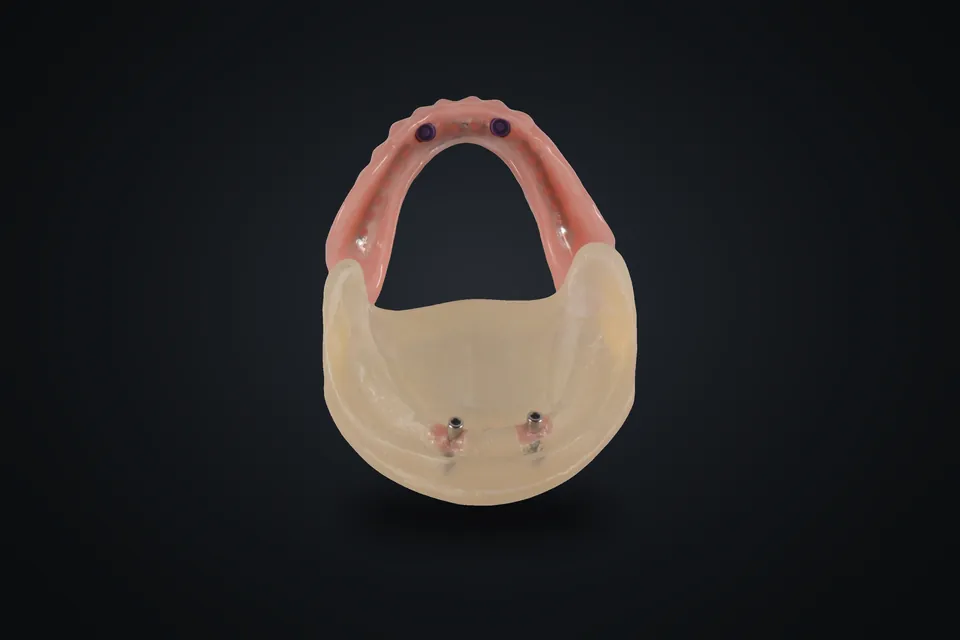
Locator- or bar-retained implant-supported complete denture that the patient can remove and insert.
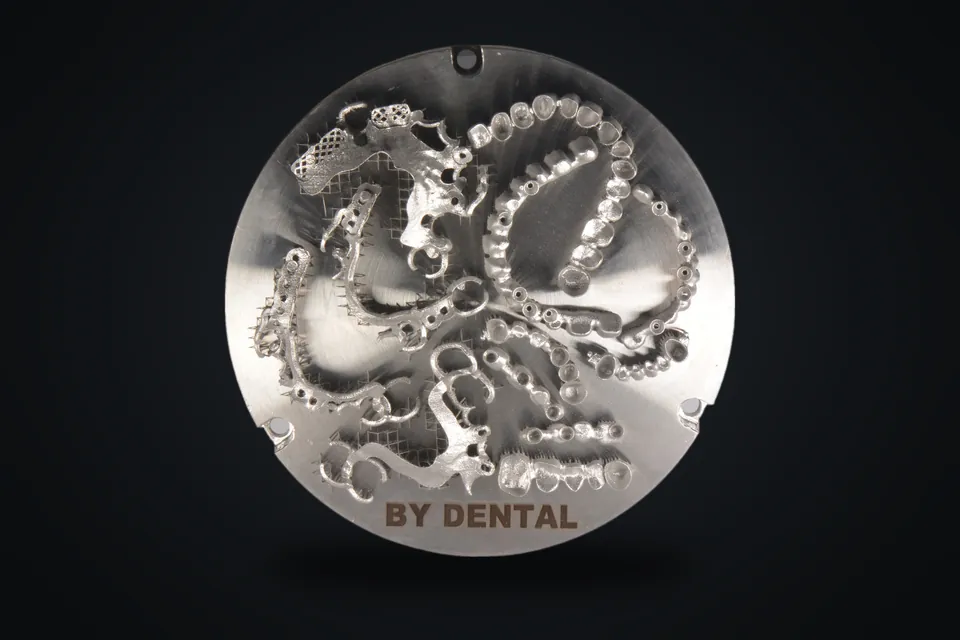
Laser Sintering (SLM Metal Frameworks)
SLM metal production from digital design for porcelain-fused-to-metal bridges and implant bar frameworks.
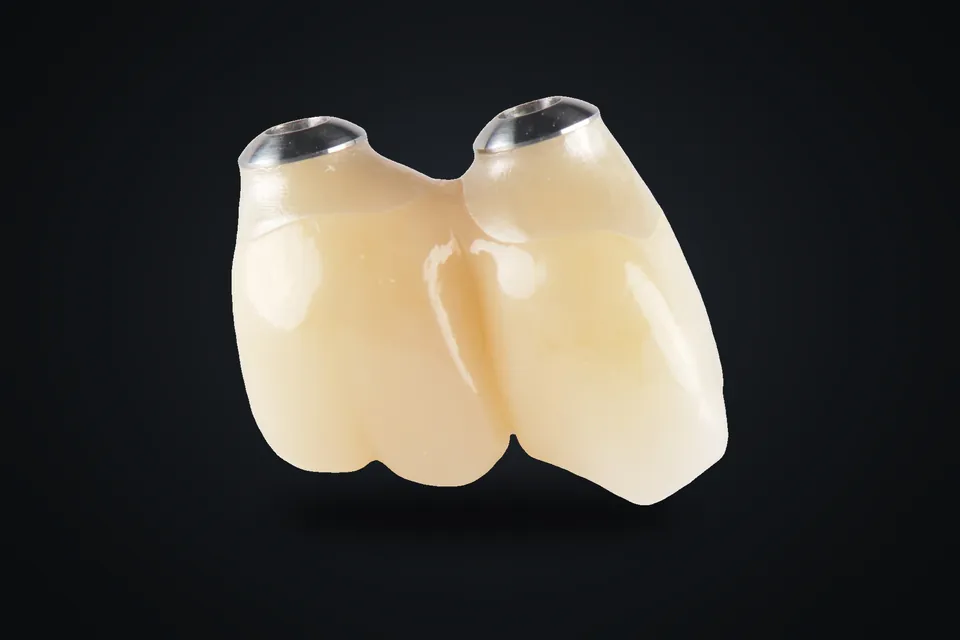
Implant Crowns and Bridges
Screw- or cement-retained implant crowns and bridges, with Ti-base and custom abutment options.
Send your All‑on‑4 / 6 hybrid case.
Fill in the form or call us. Your case manager responds within 24 hours.