
- Home
- Products
- Removable prostheses
- Telescopic Dentures
Telescopic Dentures
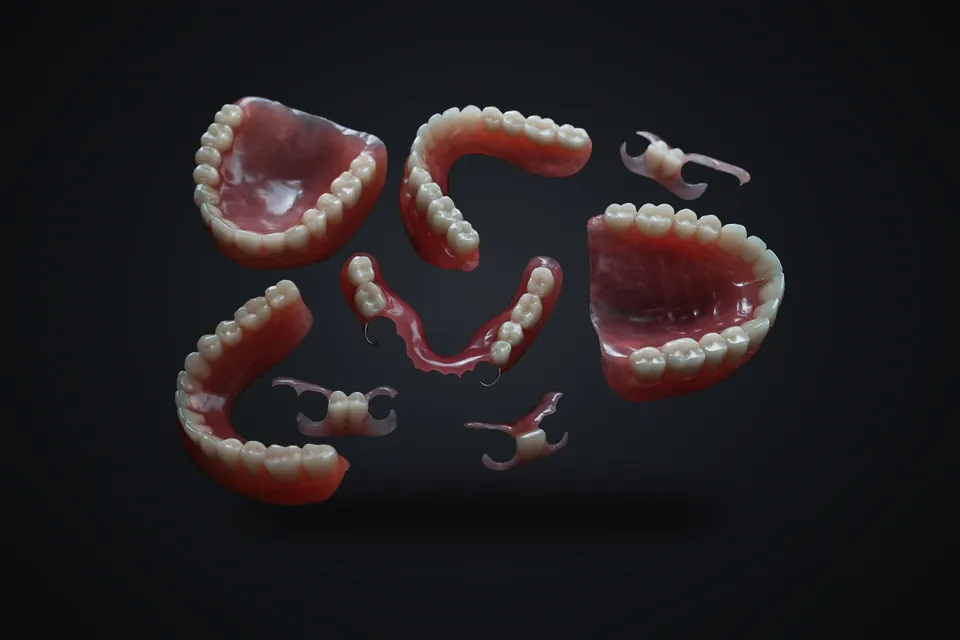
In a telescopic denture, primary crowns cemented on the abutment teeth provide retention through friction or conical fit with the secondary crowns in the denture. Parallelism of the primaries and adjustment of the secondary fit proceed through staged try-ins; for cases with few remaining teeth, we assess the plan with you.
Indications
When to choose it
- A few remaining abutment teeth scattered around the arch
- Loading teeth with reduced periodontal support together with the secondary structure
- Creating a common path of insertion for non-parallel abutments
- Cases where future tooth loss is expected and the denture should be extendable
- Combined natural tooth and implant plans (according to the dentist's plan)
Points to discuss with the laboratory
- Sufficient preparation depth is needed for primary and secondary crowns; without space the form becomes bulky and unaesthetic.
- Teeth with doubtful endodontic or periodontal status should be assessed before primary crowns are made.
- This is multi-stage work; there are more try-ins than for fixed prostheses.
For the dentist
Common path of insertion
The outer walls of the primary crowns are made parallel or tapered on the surveyor to a common path of insertion.
Controlled friction
Retention provided by the secondary crown is assessed at the try-in and adjusted if needed.
Expandable design
If one of the abutment teeth is lost, the denture can in most cases be repaired and remain in use.
Materials
| Material | Brand | Note |
|---|---|---|
| Crown and bridge alloys (Wiron 99, Magnum, Shera) | BEGO, MESA, Shera | Primary and secondary crowns |
| Precious metal alloy | Ivoclar | According to the dentist's preference |
| Framework alloy (Shera, Magnum) | Shera, MESA | Framework carrying the secondary crowns |
| Noritake porcelain or Solidex | Noritake, Shofu | Aesthetic veneering of the secondary crowns (according to the case plan) |
| Denture teeth (Vivodent, Yamachi, Ortalux) | Ivoclar, Yamachi, Union Dental | Set-up of missing teeth |
Manufacturer and CE details of materials are on the Quality page.
What we need when you send a case
- Impression with clear margins of the abutment preparations
- Pick-up impression taken with the primaries in place after the primary try-in
- Opposing arch and bite registration
- Tooth shade (VITA guide) and veneering preference
- Note on the prognosis of the teeth and any planned future extractions
Production process
- Primary crown productionPrimaries are modelled on the surveyor to a common path of insertion and produced.
- Primary try-inThe primaries are tried in and a pick-up impression is taken with them in place.
- Secondary and frameworkThe secondary crowns and the framework carrying them are produced from this impression and tried in.
- Set-up try-inThe tooth set-up is tried in on the secondary structure for aesthetics and occlusion.
- Veneering and finishingSecondary crowns are veneered, the acrylic part is completed and retention is checked a final time.
Frequently asked questions
How many abutment teeth are needed for a telescopic denture?
Telescopic dentures can be planned with only a few teeth; the distribution of the teeth around the arch matters as much as their number. If support is insufficient, adding implants or an overdenture should be considered. The decision depends on the dentist's clinical and radiographic assessment.
When should primary crowns be cemented?
In the common approach, primary crowns are cemented at the fitting appointment after the denture is completed. This sequence helps the primaries stay in a position that matches the secondary crowns in the denture.
What happens if retention decreases over time?
In friction-based systems, retention can decrease during use. In that case the denture is assessed in the laboratory, and activation or additional retentive element options are discussed depending on the design.
Frequently requested with this case
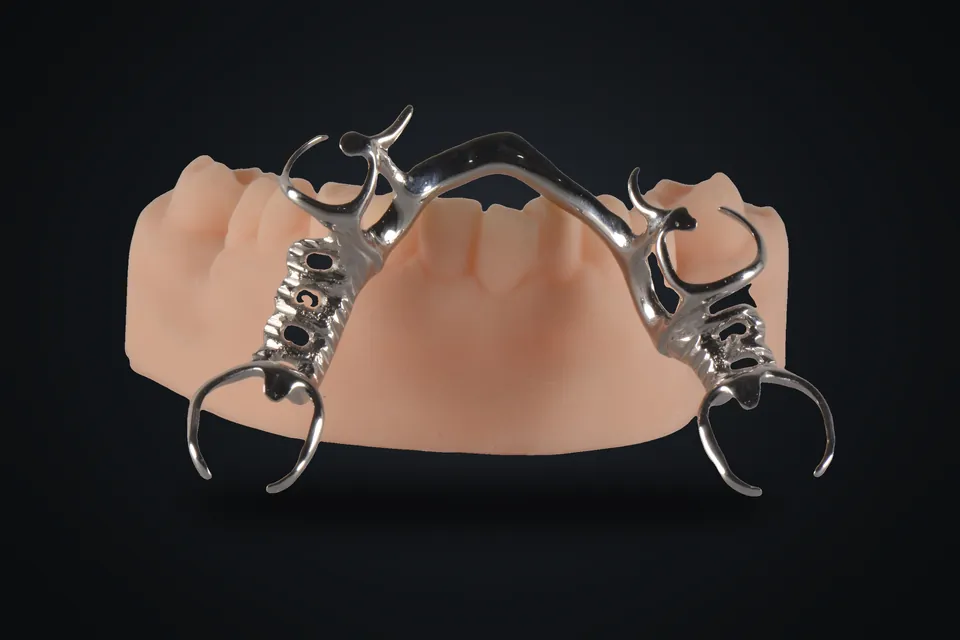
Cast Partial Dentures (CoCr Framework)
Cast metal framework with clasp and rest design, with surveyor analysis and a framework try-in.
Precision Attachment Dentures
Clasp-free combined prosthesis with precision retainers attached to crowns; the fixed and removable parts are planned together.
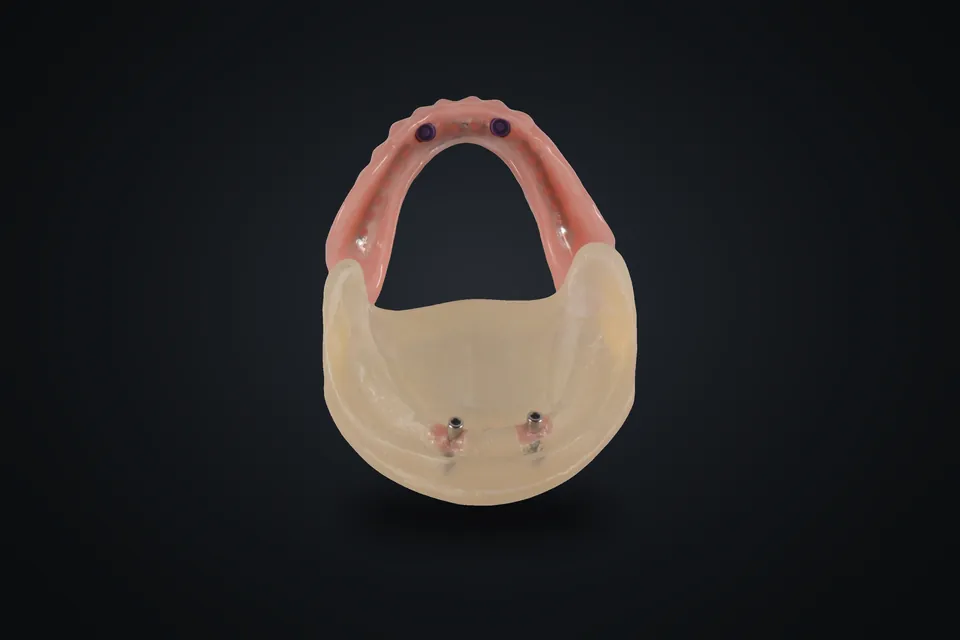
Implant Overdentures (Locator and Bar)
Locator- or bar-retained implant-supported complete denture that the patient can remove and insert.
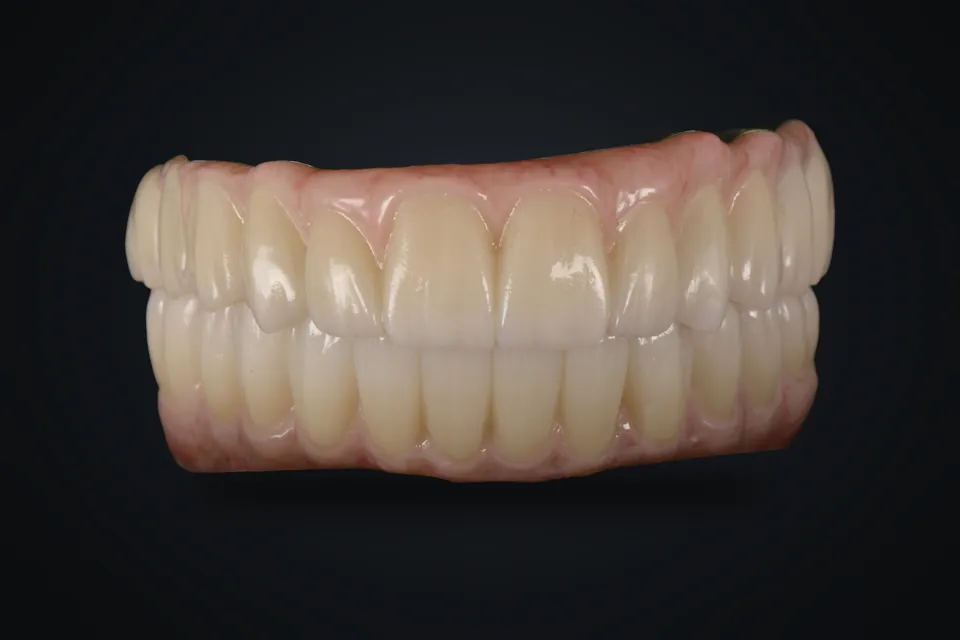
Send your telescopic denture case.
Fill in the form or call us. Your case manager responds within 24 hours.