
- Home
- Products
- Fixed prostheses
- Crowns and Bridges
Crowns and Bridges
We accept fixed prosthetic work from single crowns to multi-unit bridges and cast posts and cores on a single Rx form. We recommend materials based on bridge length, abutment condition and occlusion; the final choice between zirconia, e.max and porcelain-fused-to-metal rests with your plan.
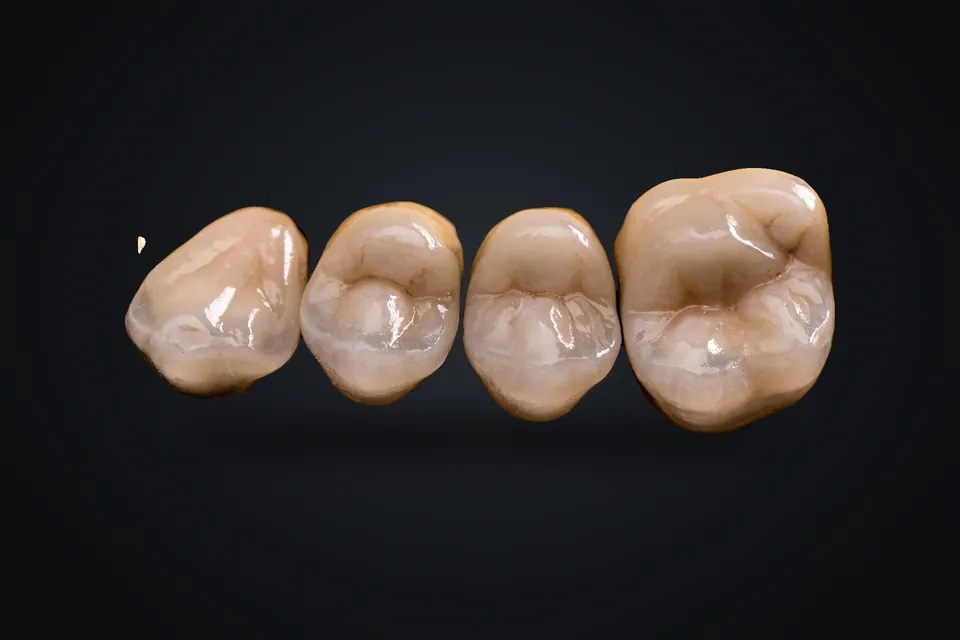
Indications
When to choose it
- Full crowns for teeth with extensive loss of tooth structure
- Cast post and core and crowns for root-filled teeth
- Tooth-supported bridge for one or more missing teeth
- Replacement of existing crowns and bridges
- Rehabilitations with a re-established occlusal vertical dimension (after the temporary stage)
Points to discuss with the laboratory
- If the periodontal support of the abutment teeth is not sufficient to carry the bridge load, implant or removable options should be considered.
- Long cantilever units increase the risk of fracture and abutment overload; they should be discussed before design.
- If the abutments are not parallel, a common path of insertion may not be achievable; preparation correction or a split design may be required.
For the dentist
Mixed cases on a single Rx form
A zirconia bridge, e.max crown and post and core can be planned together in the same mouth. All units are shade-matched to the same reference.
Transfer from temporary to definitive
Where the occlusion changes, it is first tested with a PMMA temporary. The approved form is transferred to the definitive design.
Connector and pontic check
Connector cross-sections and pontic form are checked against the number of abutments and span length.
Materials
| Material | Brand | Note |
|---|---|---|
| Zirconia disc | Zirkonzahn | Monolithic or layered crowns and bridges |
| IPS e.max Press | Ivoclar | Metal-free single crowns and short bridges |
| Wiron 99, Magnum, Shera | BEGO, MESA, Shera | Crown and bridge alloys for metal-supported work |
| Noritake porcelain | Noritake | Veneering on a metal framework |
| Solder (Lot) | Dentaurum | Metal bridge connections where required |
| PMMA | – | Milled temporary crowns and bridges |
Manufacturer and CE details of materials are on the Quality page.
What we need when you send a case
- Impression or scan with clear margins on all abutments
- Opposing arch and bite registration; facebow record if available
- Shade (VITA guide) and abutment shade
- Material preference or request for a laboratory recommendation
- Desired pontic form (ovate, modified ridge-lap, etc.)
- Root canal impression for post and core work
Production process
- Path of insertion analysisParallelism of the abutments and a common path of insertion are assessed on the model or scan.
- Material confirmationIf needed, the material choice is confirmed with you based on span, abutment shade and occlusion.
- DesignCrowns, pontics and connectors are built in CAD or by wax-up.
- ProductionMilling, pressing, casting or laser sintering is carried out according to the chosen material.
- Try-in and finishingWhere required, veneering and glaze are completed after a framework try-in.
Photographs
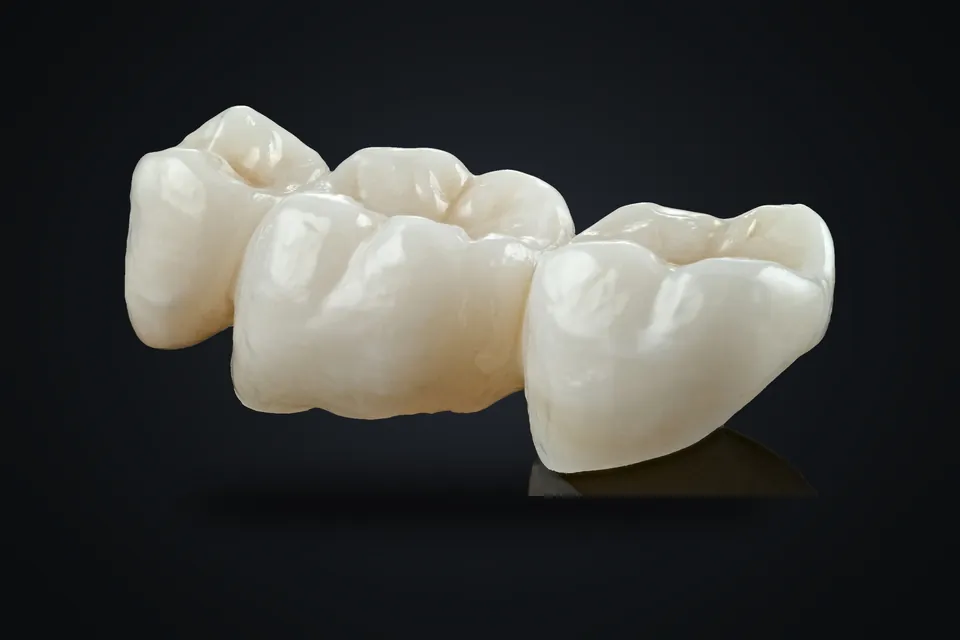
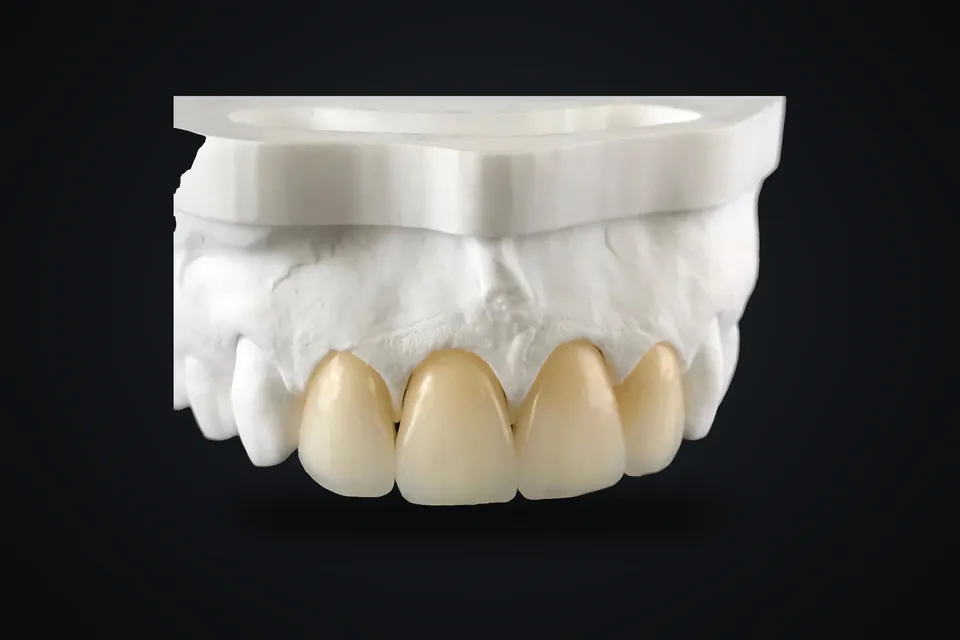
Frequently asked questions
Is a framework try-in needed for a bridge?
For short bridges with a good impression, finishing can usually proceed directly. For long spans and multi-abutment bridges, a framework try-in is recommended to verify passive fit. If a metal framework does not fit, it can be sectioned and soldered; for zirconia, a new framework is produced.
What should I send for a cast post and core?
You can send a root canal impression or a post pattern prepared in the mouth. Sufficient dentine wall at the canal orifice is important for long-term success. After the post and core is cemented, a separate impression is usually taken for the crown.
Which material do you recommend for which case?
Monolithic zirconia is often chosen for posterior teeth and parafunction, and e.max or layered zirconia for anterior teeth. For long spans, porcelain-fused-to-metal remains a reliable option. The final decision rests with the dentist's clinical plan.
Frequently requested with this case
Zirconia Crowns and Bridges
Monolithic or layered zirconia crowns and bridges; CAD/CAM milling, sintering and shading.
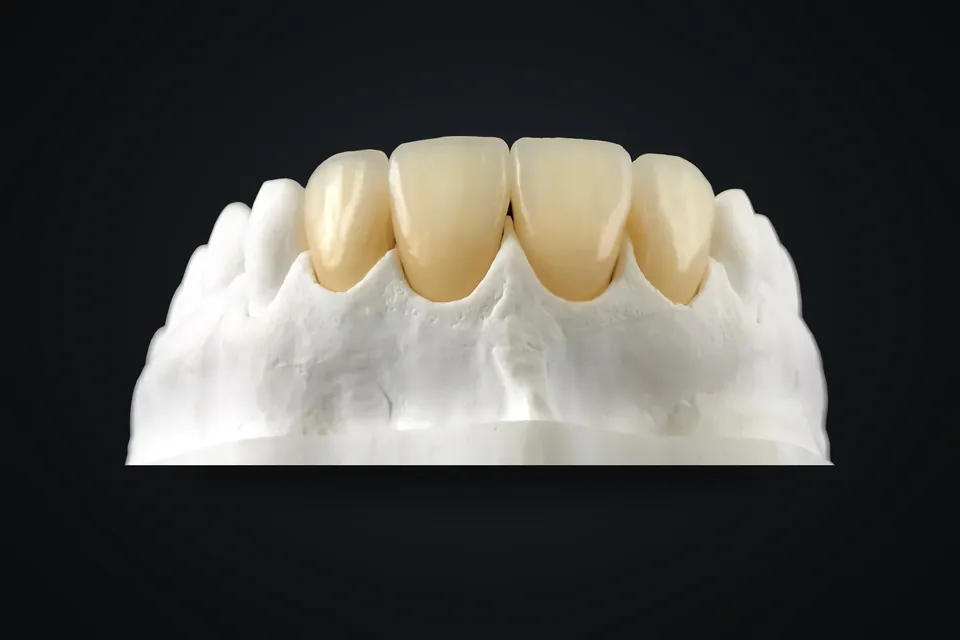
Pressed e.max ceramics and porcelain-fused-to-metal
Pressed IPS e.max ceramics and Noritake porcelain-fused-to-metal, for anterior aesthetics and long bridges.
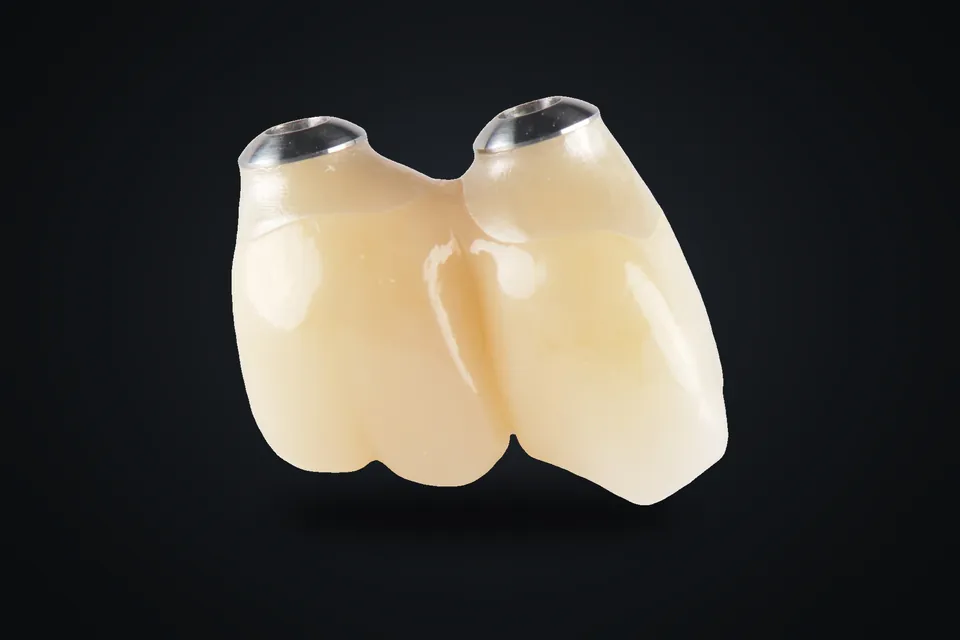
Implant Crowns and Bridges
Screw- or cement-retained implant crowns and bridges, with Ti-base and custom abutment options.
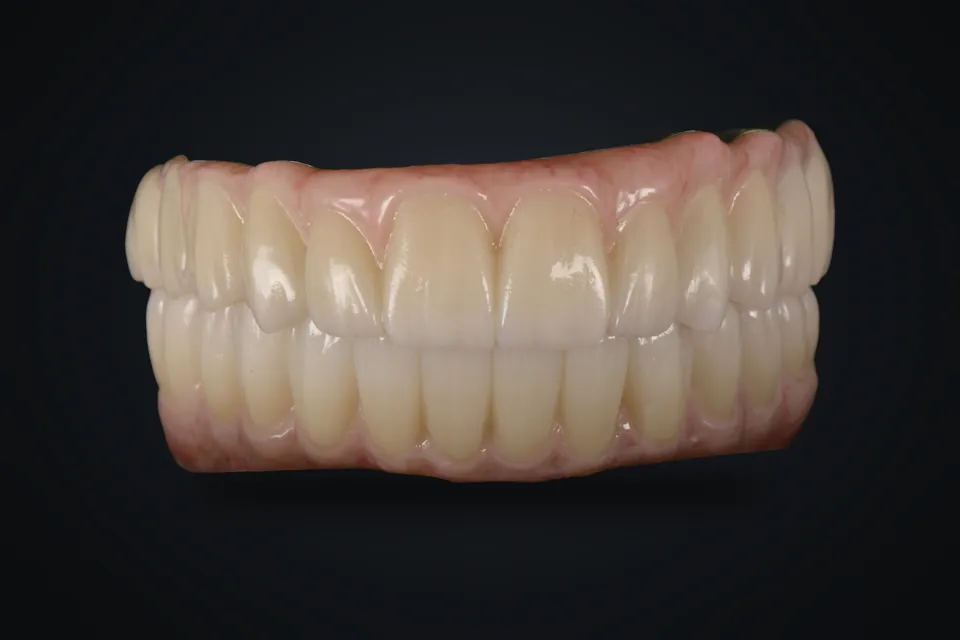
Send your crown and bridge case.
Fill in the form or call us. Your case manager responds within 24 hours.