
- Home
- Products
- Implant restorations
- Implant Crowns
Implant Crowns and Bridges
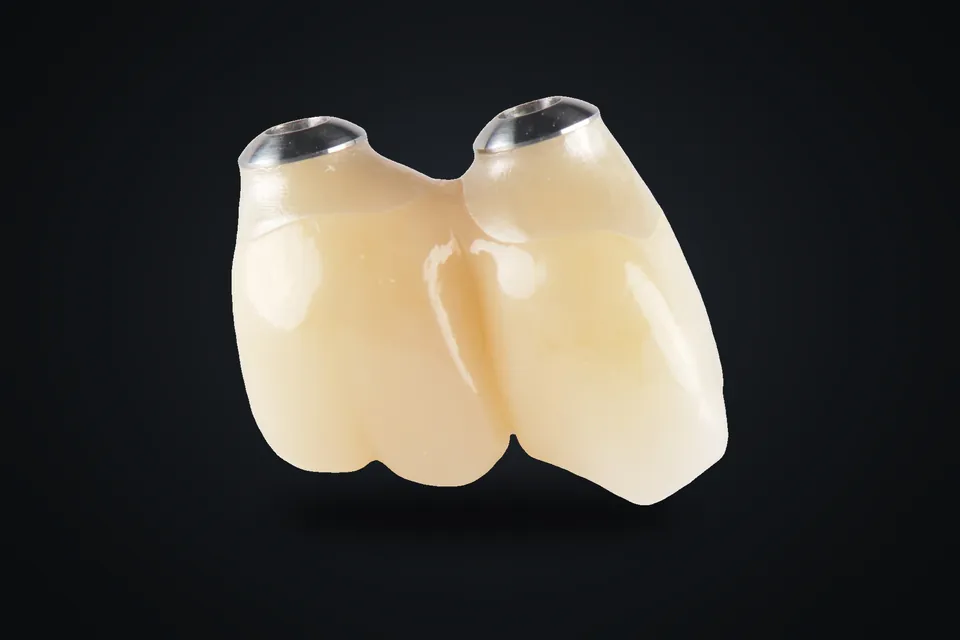
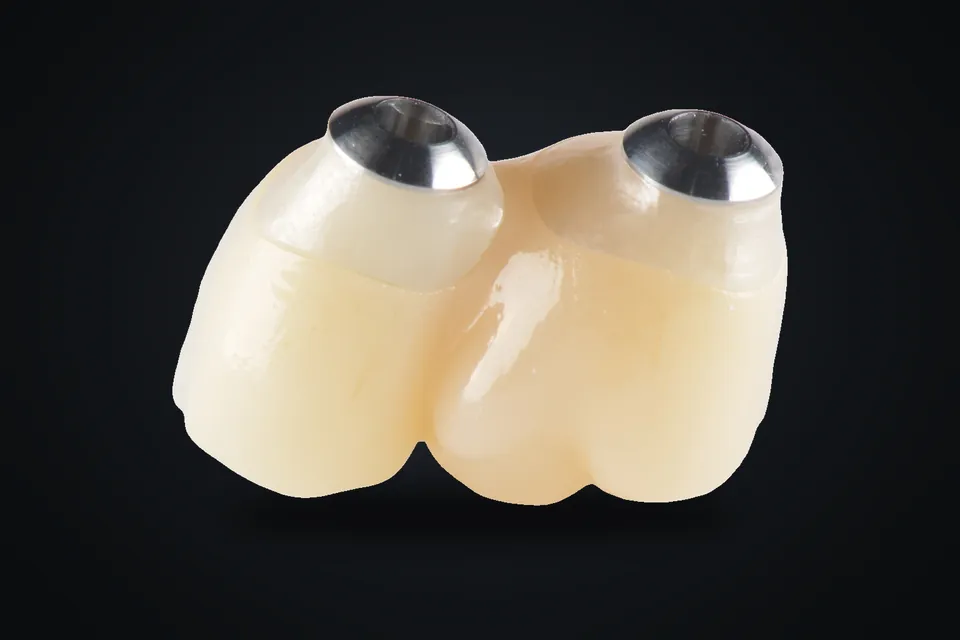
We produce single-tooth and bridge implant superstructures, screw- or cement-retained, on a Ti-base or custom abutment. We work with Straumann, Nobel Biocare, Astra, Ankylos, Biomet 3i and Neoss systems; screw channel direction and emergence profile are agreed with you at the design stage.
Indications
When to choose it
- Single-tooth implant crown
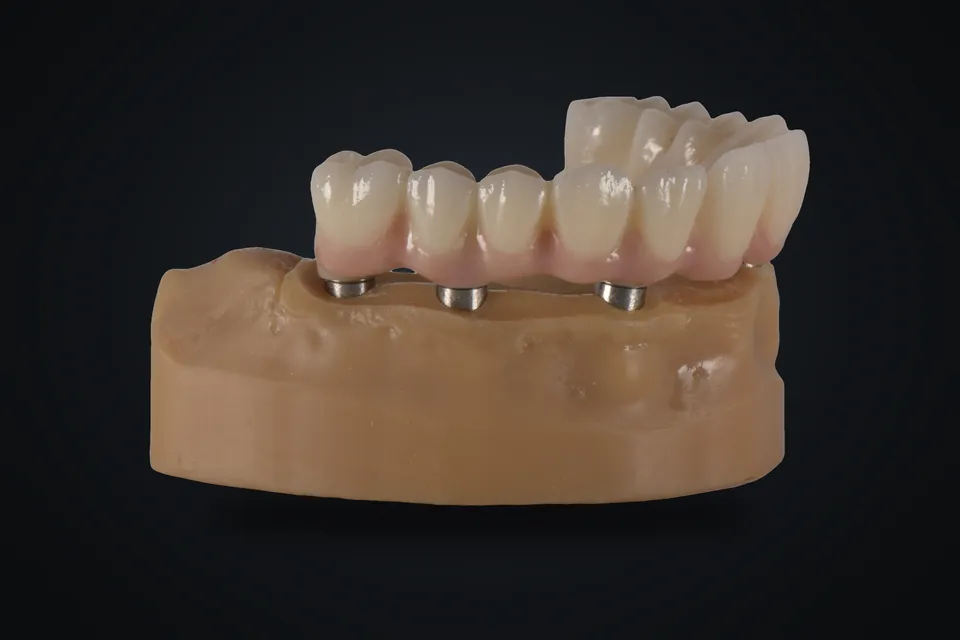
- Bridge on two or more implants
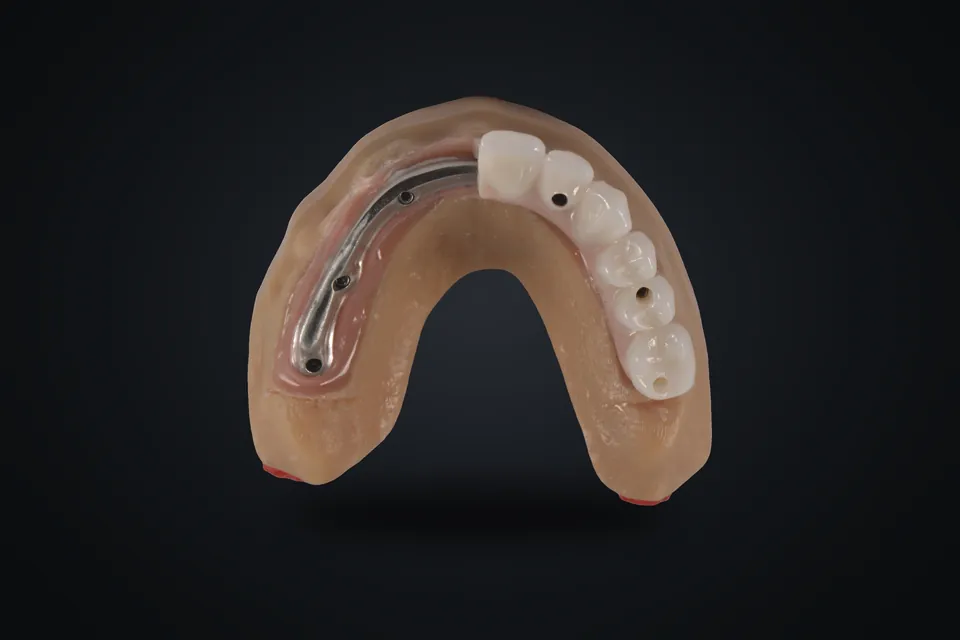
- Screw-retained zirconia where the screw channel exits palatally or at the occlusal centre
- Cement-retained solution on a custom abutment for angled implants
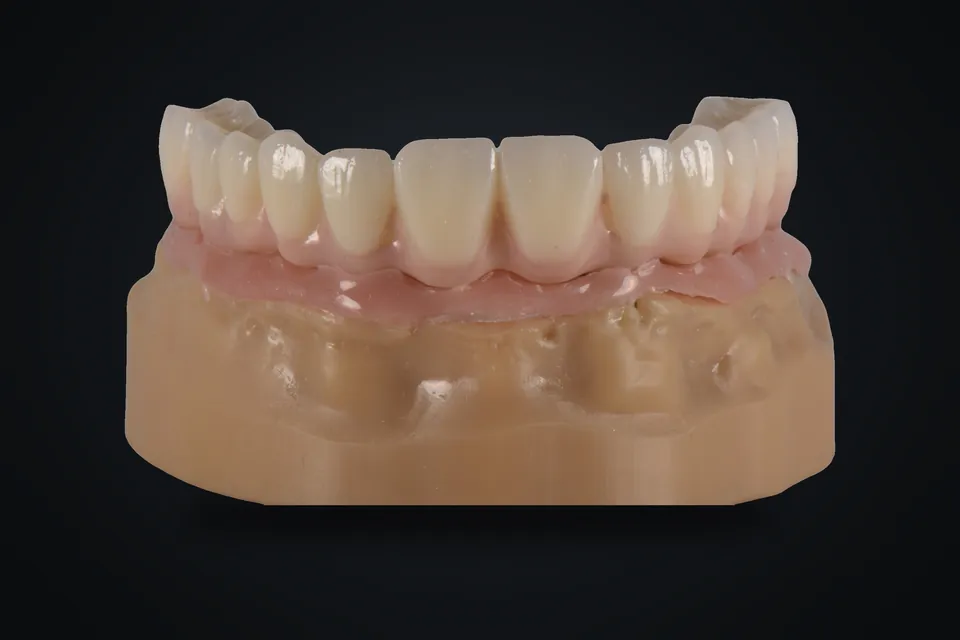
- Superstructure with contoured soft tissue profile in the aesthetic zone
Points to discuss with the laboratory
- If the screw channel exits labially, a screw-retained design may not be suitable in the aesthetic zone; a cement-retained or, depending on the system, angled-channel option should be discussed.
- In cement-retained work, a very deep abutment margin increases the risk of residual cement; the margin should be planned close to tissue level.
- For implant systems not on the list, availability of connection components should be confirmed before the case.
For the dentist
Connection details check
The design follows the implant system and connection type you specify. If platform or scan body details are missing, we contact you before production.
Screw channel plan
The screw channel exit point is checked in the design. If it would cause an aesthetic or occlusal problem, the abutment type is changed together with you.
Emergence profile
The contour of the superstructure within the tissue is designed to the profile shaped by the healing abutment or temporary.
Passive fit of the bridge
For multi-unit work, passive fit is checked with a framework or verification try-in.
Materials
| Material | Brand | Note |
|---|---|---|
| Zirconia disc | Zirkonzahn | Monolithic or layered superstructure |
| Ti-base | – | Connection component compatible with the implant system |
| Custom abutment | – | Angle and emergence profile are designed for each case |
| Noritake porcelain | Noritake | Layered and metal-supported superstructures |
| PMMA | – | Temporary implant-supported restoration |
Manufacturer and CE details of materials are on the Quality page.
What we need when you send a case
- Implant system, platform diameter and connection type, implant positions
- Intraoral scan with scan bodies, or open/closed-tray impression with transfers
- Transfers and analogues if working from an impression
- If possible, a scan showing the emergence profile or a model with a gingival mask
- Opposing arch and bite registration
- Screw- or cement-retained preference
- Shade (VITA guide) and photographs of the adjacent teeth
Production process
- Connection checkSystem, platform and scan body details are checked and the analogue position is verified.
- Abutment selectionDepending on the screw channel direction, a Ti-base, custom abutment or cement-retained design is chosen.
- Design checkEmergence profile, contacts and channel exit are checked; the design is shared with you if needed.
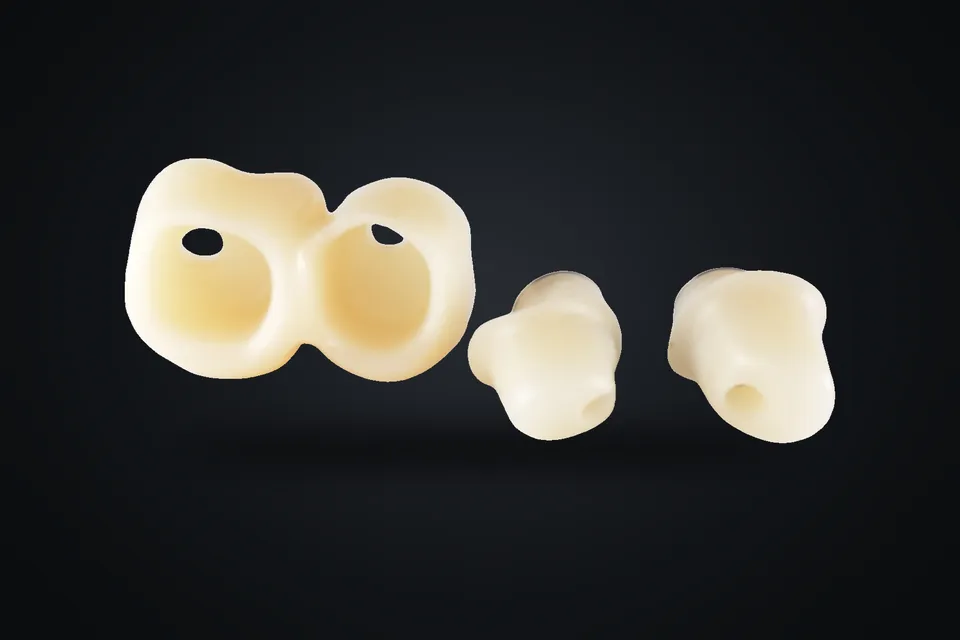
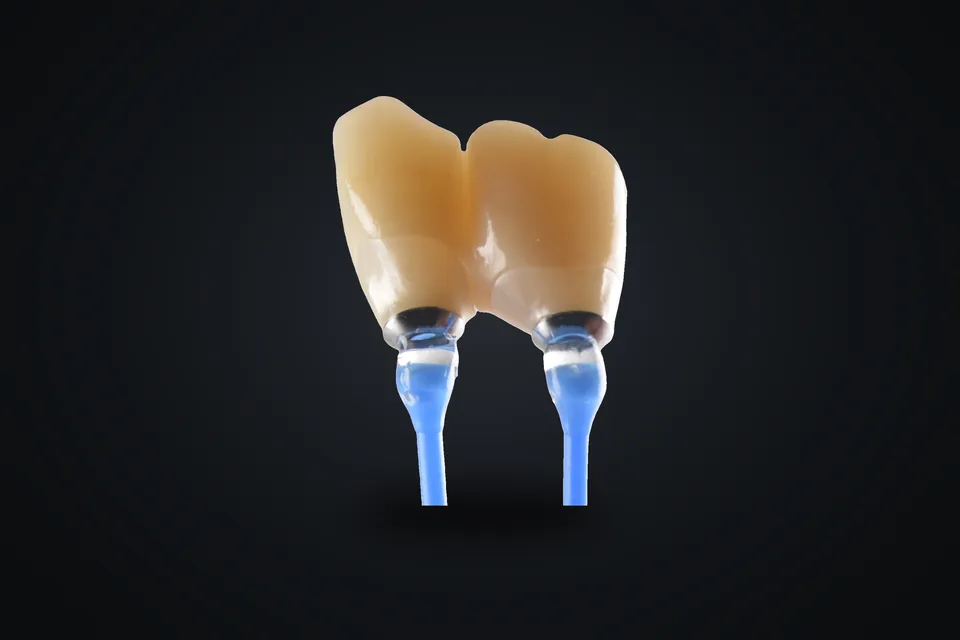
- Production and bondingThe superstructure is milled, sintered and bonded to the Ti-base.
- Model checkSeating, contacts and occlusion are checked on the analogue model.
Photographs
Frequently asked questions
Should I choose screw-retained or cement-retained?
A screw-retained design allows retrievability and eliminates the risk of residual cement. If the screw channel does not exit in an aesthetically or occlusally suitable position, a cement-retained design on a custom abutment can be chosen. The decision can also be made once the channel position is seen in the design.
Which implant systems do you work with?
We work with Straumann, Nobel Biocare, Astra, Ankylos, Biomet 3i and Neoss systems. If you use a different system, the connection type and component availability are confirmed with you before the case.
Should I send a scan with scan bodies or an impression?
For single crowns and short bridges, intraoral scanning with scan bodies is common. For multiple implants or long spans, an open-tray impression with splinted transfers may be more reliable. Always state which scan body you used.
Who bonds the superstructure to the Ti-base?
The zirconia superstructure is bonded to the Ti-base in the laboratory and the restoration is sent as a single piece. At the clinic, only screw tightening to the manufacturer's recommended torque and sealing of the channel remain.
Frequently requested with this case
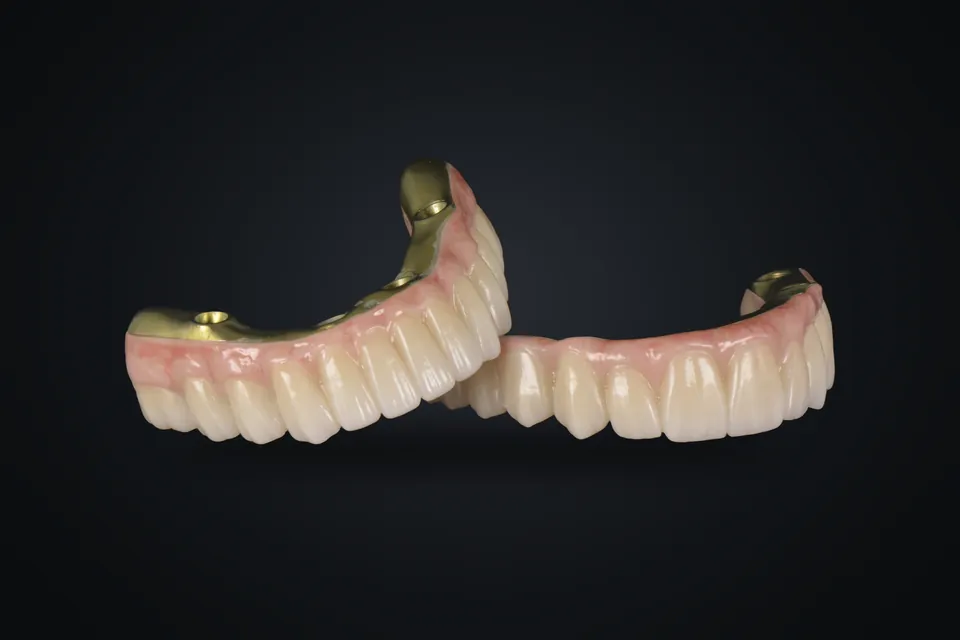
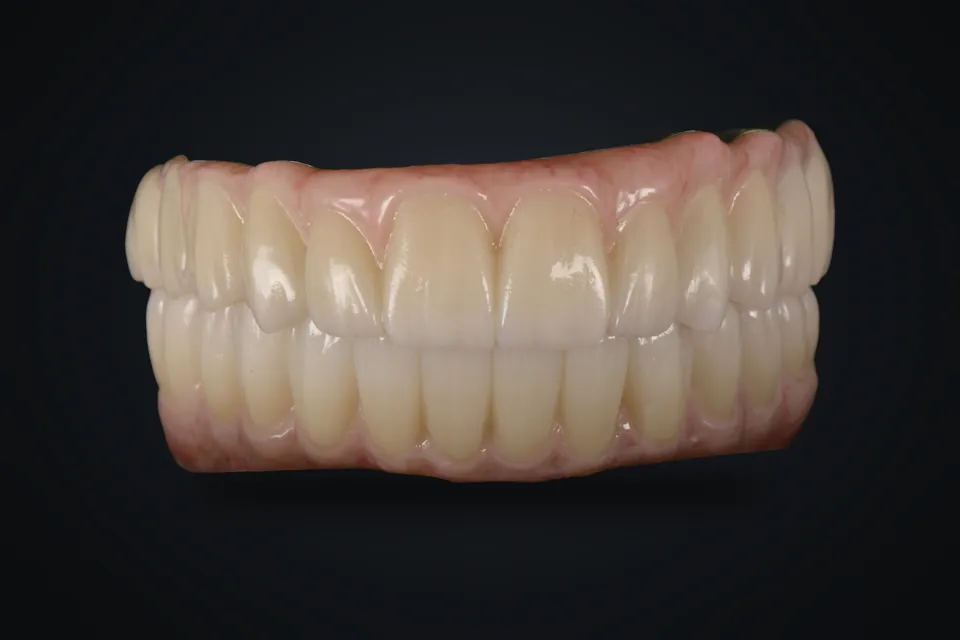
All‑on‑4 / All‑on‑6 Hybrid Prosthesis
Bar-retained acrylic/composite hybrid or zirconia full-arch; screw-retained on 4–6 implants.
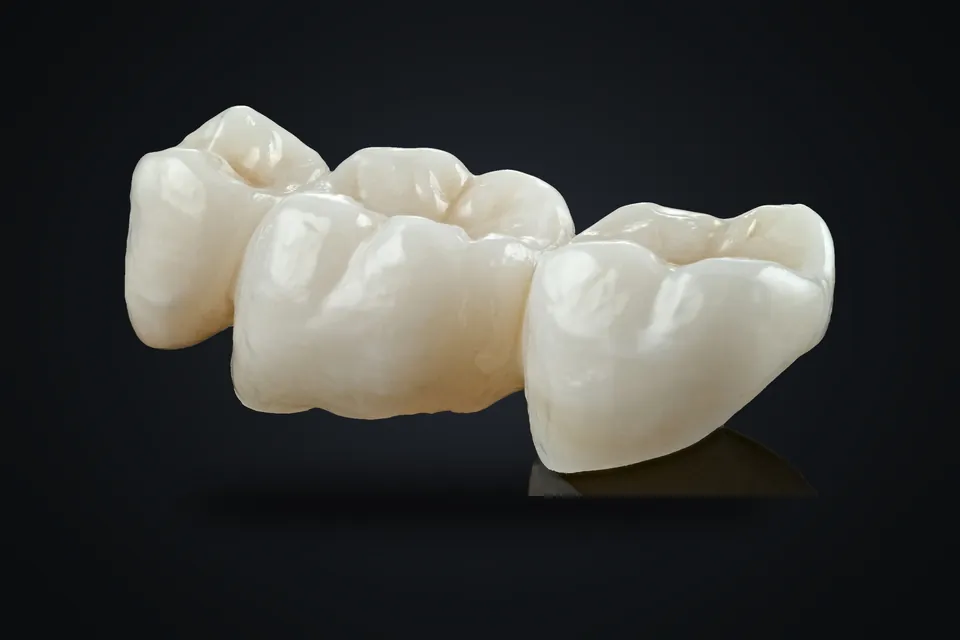
Zirconia Crowns and Bridges
Monolithic or layered zirconia crowns and bridges; CAD/CAM milling, sintering and shading.
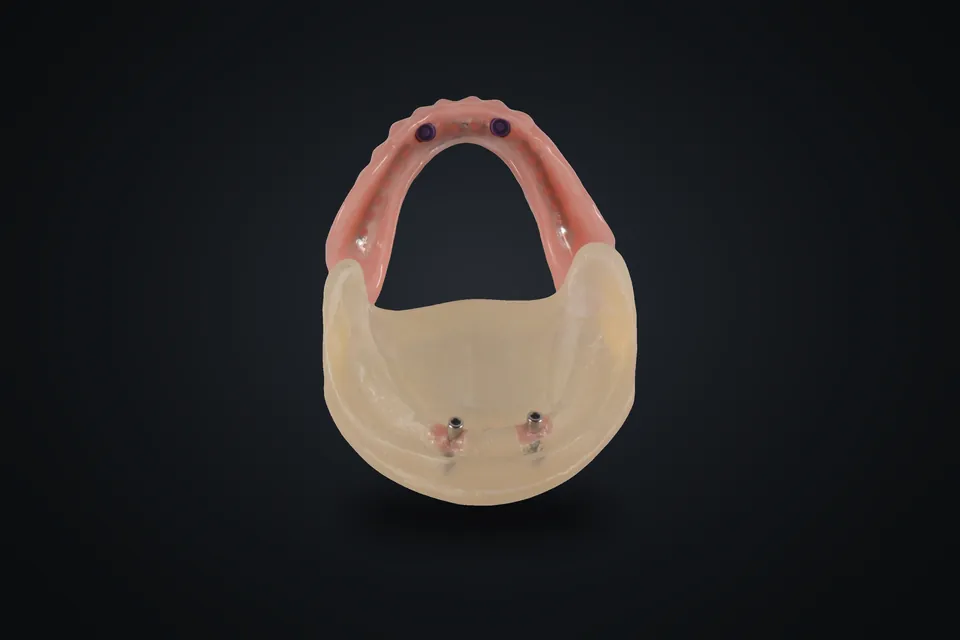
Implant Overdentures (Locator and Bar)
Locator- or bar-retained implant-supported complete denture that the patient can remove and insert.
Send your implant crown case.
Fill in the form or call us. Your case manager responds within 24 hours.