
- Home
- Products
- Removable prostheses
- Precision Attachments
Precision Attachment Dentures
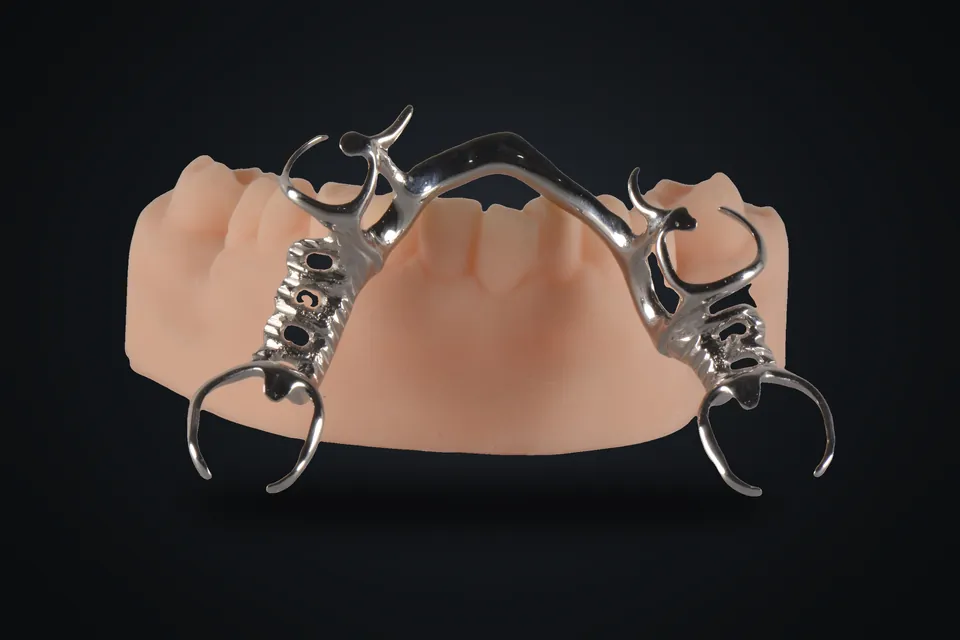
In a precision attachment denture, a patrix attached to crowns on the abutment teeth engages a matrix in the cast partial denture to provide retention without clasps. We work with Bredent, Schütz Dental, Ancorvis, Servo Dental and Microtecnor retainers and recommend the attachment type according to the available space and number of abutments.
Indications
When to choose it
- Partial cases where visible clasps in the anterior region are not wanted
- Plans combining free-end saddles with abutment crowns
- Combined work joining a fixed bridge and a removable denture
- Frameworks connected to canine or premolar crowns with a slide attachment
Points to discuss with the laboratory
- An attachment needs vertical space inside or outside the crown; short clinical crowns limit the choice of retainer.
- A free-end attachment on a single abutment can overload the abutment; splinting more than one tooth should be considered.
- Plastic or metal matrices wear over time; replacing them is part of the maintenance plan.
For the dentist
Clasp-free appearance
The retainer is positioned on the distal or lingual surface of the crown. No metal clasp is visible in the anterior region.
Different retainer options
Because we work with retainers from several manufacturers, a system can be chosen to suit the space and retention required.
Replaceable components
In most systems, worn retentive inserts can be replaced without renewing the denture.
Materials
| Material | Brand | Note |
|---|---|---|
| Bredent precision attachments | Bredent | Precision retainer |
| MK-1 | Schütz Dental | Precision retainer |
| FM-1, FM-3 | Ancorvis | Precision retainer |
| AP | Servo Dental | Precision retainer |
| Aso-52 | Microtecnor | Precision retainer |
| Crown and bridge and framework alloys | BEGO, MESA, Shera | Abutment crowns and framework |
| Noritake porcelain | Noritake | Veneering of abutment crowns |
Manufacturer and CE details of materials are on the Quality page.
What we need when you send a case
- Impression of the abutment preparations and opposing arch
- Bite registration; with a record base in the free-end area
- Crown shade and shade of the framework teeth (VITA guide)
- Preferred attachment system or request for a laboratory recommendation
- Pick-up impression taken with the crowns in place after the crown try-in
Production process
- Attachment selectionVertical space and path of insertion are measured on the model and the retainer type is chosen.
- Crown and patrixAbutment crowns are modelled on the surveyor together with the attachment patrix and produced.
- Crown try-inThe crowns are tried in and a pick-up impression is taken with them in place.
- Framework and matrixThe matrix housing is integrated into the framework and a framework try-in is carried out.
- Set-up and finishingAfter the set-up try-in the denture is completed; crowns and denture are delivered together.
Frequently asked questions
Which attachment should I choose?
The choice depends on crown height, number of abutments, length of the free-end saddle and the patient's dexterity. After measuring the space on the model we recommend a suitable retainer; if you prefer a particular system, we proceed with it.
When should attachment crowns be cemented?
The crowns are usually cemented at the fitting appointment together with the denture. Immediately after cementation, seating of the denture is checked to verify the path of insertion of the attachment and matrix.
What happens when a retentive insert wears?
Plastic or metal matrices can be replaced according to the system used. Retention should be assessed at review appointments and new parts requested from the laboratory if needed.
Frequently requested with this case
Cast Partial Dentures (CoCr Framework)
Cast metal framework with clasp and rest design, with surveyor analysis and a framework try-in.
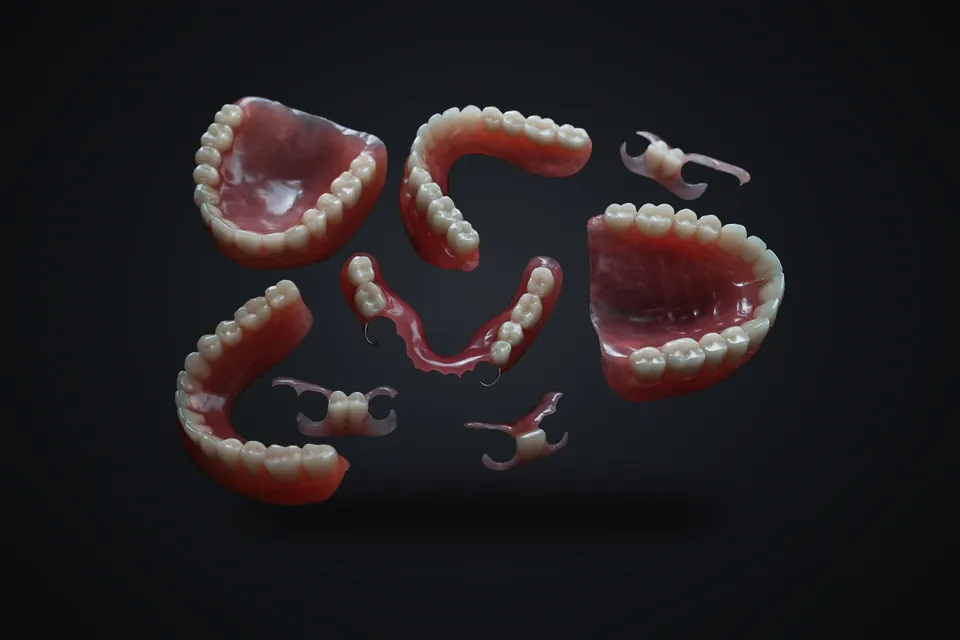
Telescopic Dentures (Primary and Secondary Crowns)
A removable denture retained by the fit of primary and secondary crowns, which can be extended when needed.
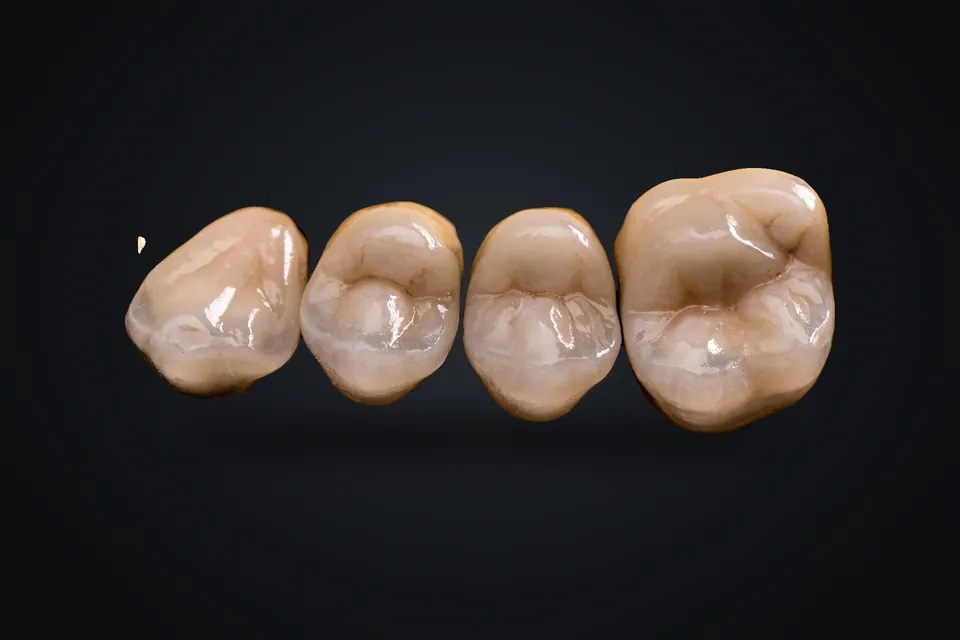
Crowns and Bridges
Single crowns, multi-unit bridges and posts and cores, in zirconia, e.max or porcelain-fused-to-metal.
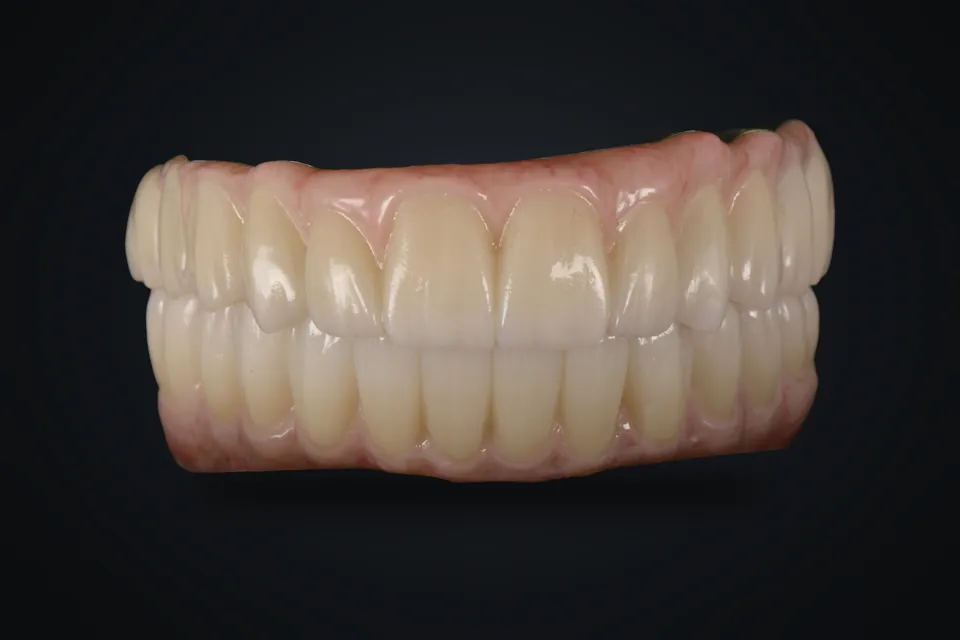
Send your precision attachment case.
Fill in the form or call us. Your case manager responds within 24 hours.